
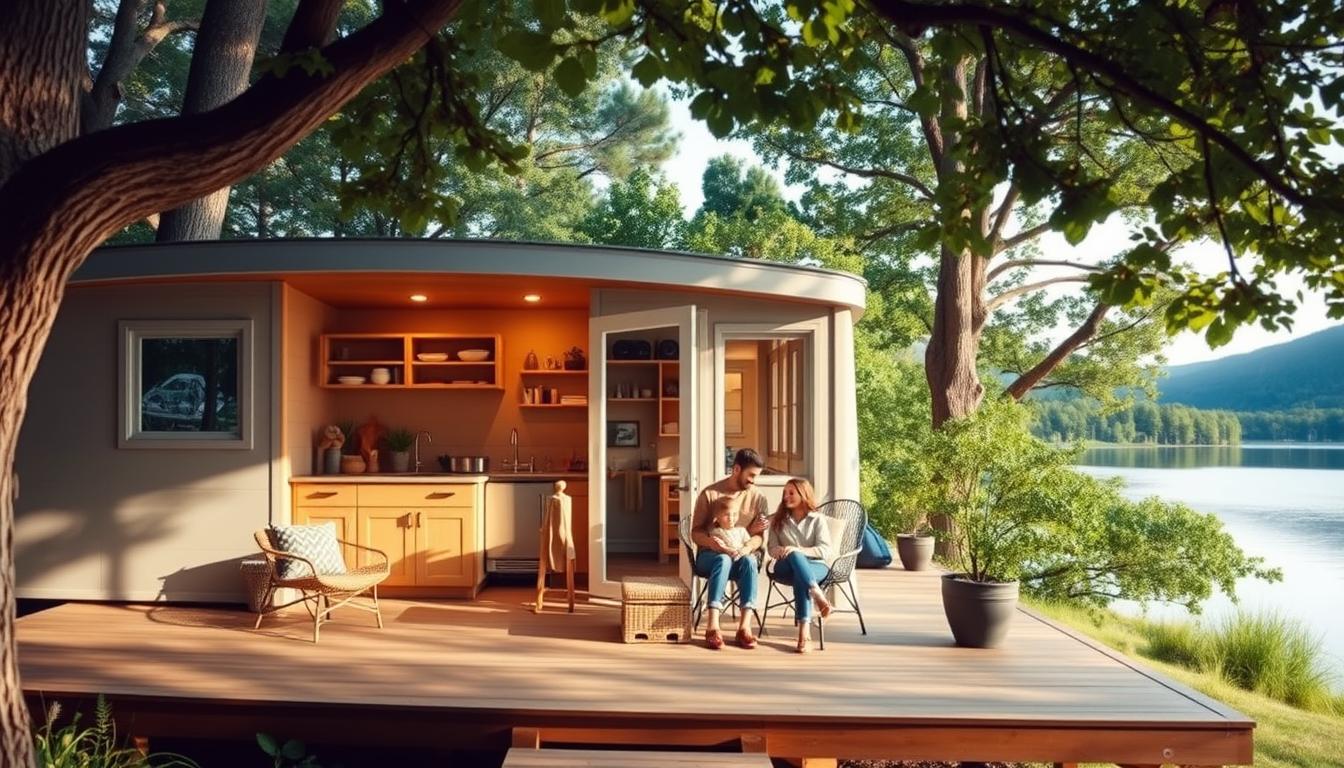
Your move into tiny living starts with clear priorities. Tiny house on wheels, RV, skoolie, or Sprinter van—each option brings different mobility, comfort, and cost. Think about where you want to park, how often you’ll travel, and what utilities you’ll need.
Legal and safety realities matter early. Local rules can limit where houses on wheels may stay. Some communities, like Whispering Aspen Village in Colorado, offer legal lots. Insurance often asks for RVIA or inspection paperwork for units on wheels.
Good design and storage make daily life easier. Open plans, light colors, mirrors, and vertical storage boost perceived space. Tow safety ties to GVWR, tongue weight, and vehicle pairing, so plan your trailer and tires carefully.
Key Takeaways
- Match your lifestyle and needs to the right type of tiny house or RV.
- Check zoning, parking rules, and insurance requirements before you buy.
- Plan for towing safety: weight limits, tongue load, and tire care.
- Prioritize smart storage, open layouts, and bright finishes for comfort.
- Decide on energy and water systems early to avoid surprises.
Start with your lifestyle goals and living needs
Map a typical weekday and weekend to see how your routines fit into compact space. Note work hours, meal prep, hobbies, and sleep patterns. This reveals practical layout choices and storage needs.
Daily routines, hobbies, and required amenities
- List must-haves: desk, strong Wi‑Fi, pet spot, or full kitchen.
- Right-size the kitchen: fewer burners and a smaller fridge change cooking and shopping habits.
- Plan hobby storage: vertical racks and foldaway furniture save floor space.

How often you plan to move vs. stay put
If you move often, choose lighter builds and simpler systems. If you plan semi-stationary living, allow more fixed features and larger footprints.
| Scenario | Build weight | Kitchen setup | Storage strategy |
|---|---|---|---|
| Frequent movers | Light, tow-friendly | Compact, 1–2 burners | Portable bins, hooks |
| Semi-stationary | Heavier, insulated | Full-size or upgradeable | Built-in cabinets, lofts |
| Test-living trial | Temporary setups | Minimal, uses community kitchens | Rent storage, try layouts |
Be honest with yourself: test short stays, discuss privacy and noise, and prioritize the essentials that make home life joyful.
Know the zoning laws and where you can dwell
Local codes can make or break plans for living small, so start by learning how your town treats tiny dwellings.

Many municipalities still lack clear rules for tiny house life. Some allow accessory dwelling units (ADUs) and modular dwellings. Others classify units on wheels as recreational vehicles and require periodic movement.
Mobile home, RV, and tiny home community options in the U.S.
Designated parks and tiny home communities can simplify compliance. Whispering Aspen Village, for example, sells lots with known standards and utility hookups.
“If you need certainty, look for communities or parks that list rules and permit support.”
Staying on private land vs. on-the-move requirements
Before living on family or friend land, get written confirmation from planning staff. Removing a trailer’s wheels may change its classification and affect permits, taxes, or inspections.
| Scenario | Common ruling | Practical step |
|---|---|---|
| ADU allowance | Permitted with setbacks | Apply for ADU permit; check utility hookups |
| RV-style stay | Short-stay limits (e.g., two weeks) | Confirm campground or overnight rules |
| Tiny home community | Lot ownership or lease | Review community covenants and fees |
- Research zoning laws and building codes early.
- Verify whether wheel removal changes classification.
- Keep written approvals from planning and zoning offices.
Permits, codes, and the approval process
Start by confirming how your jurisdiction classifies mobile units—RV, modular, or site-built—so your plans match code and avoid surprises. Early contact with planning and building departments speeds the review process.

Working with planning and building departments
Call local staff and ask which submittal requirements apply to your house. Learn whether the unit will be treated as an RV, an ADU, or a site-built dwelling.
Clear documentation—a tidy site plan and utility approvals—helps reviewers and reduces resubmittals.
Submitting architectural plans and meeting state code
Prepare professional plans and engineered details when required. Well-drawn plans shorten review cycles and lower the chance of costly revisions.
Expect inspections for electrical, plumbing, structural, and life-safety systems. Even tiny house builds must meet state code: egress, alarms, stair specs, and load paths.
- Build a realistic permit timeline; reviews and resubmittals can add weeks.
- Keep permits, septic approvals, and inspection sign-offs in one folder.
- Consider hiring a code-savvy designer or engineer to smooth the process.
“A quick pre-application call can clarify requirements and save time.”
Insurance realities for tiny homes and homes on wheels
Coverage for small homes can hinge on paperwork, inspections, and builder credentials. Start the insurance conversation early so you know underwriting requirements and can shape your plans accordingly.

RVIA certification and insuring a DIY build
Many RV insurers prefer RVIA-certified units. A certified tiny house or tiny home often meets insurer checklists and is easier to insure.
DIY builders should document every step. Photos, receipts, and licensed inspections speed approvals and reduce gaps.
Inspections, documentation, and coverage gaps
Clarify the scope of coverage: liability, collision, personal property, and full-timer protections can differ widely.
- Make sure you ask insurers early what they require for coverage.
- Get electrical and structural inspections for custom systems.
- Confirm endorsements for solar, lithium batteries, and wood stoves.
“Keep plans and change orders organized so claims reviewers can verify construction and compliance.”
Reassess policies after moves or upgrades and verify whether wheel removal affects eligibility under local rules.
Tow vehicle, trailer, and weight capacity
Before you hitch up, know what your vehicle and trailer can safely manage. Start with the numbers: gross vehicle weight rating (GVWR), payload, and tongue weight. These determine handling, braking, and legal compliance.
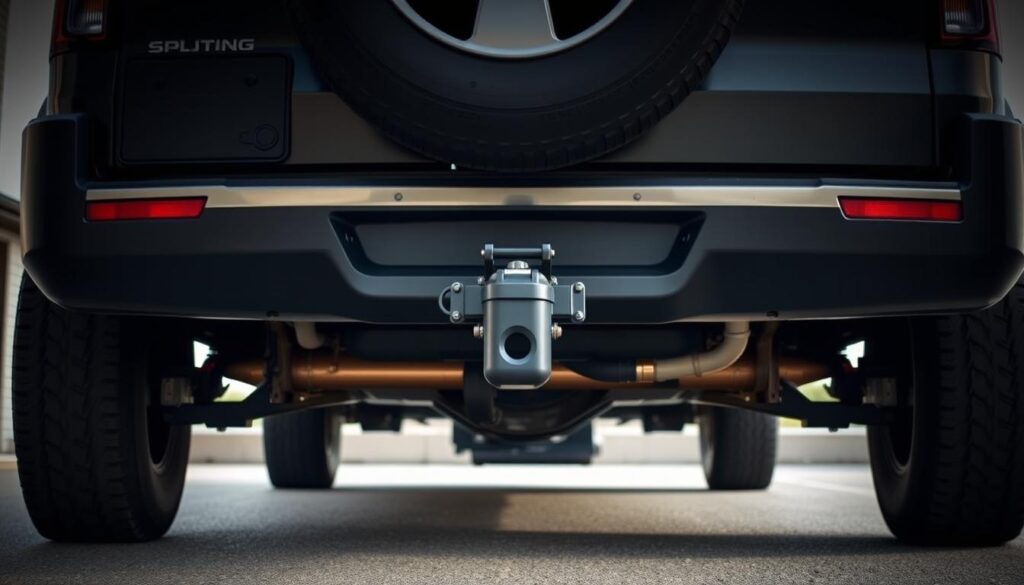
Gross vehicle weight rating, payload, and tongue weight
GVWR includes the trailer and its load. A 10,000-pound rating is the combined rolling weight: trailer, house structure, water, propane, and gear.
Payload is what your tow vehicle can carry. Tongue weight keeps the hitch stable; aim for the manufacturer’s recommended percentage of total weight.
Understanding what your vehicle can safely pull
Verify hitch class, brake controller, and any weight-distribution system. Proper setup reduces sway and eases braking.
“Weigh your rig fully loaded at a public scale before long trips — real numbers beat estimates.”
Wheel bearings, tire care, and safe relocation
Service wheel bearings: inspect, lubricate, and repack on a schedule. Check tires for UV damage and aging, keep PSI correct, and replace cracked rubber.
- Practice towing in an empty lot to test steering, climbs, and descents.
- Plan routes with bridge clearances and steep grades in mind.
- Carry spares: tire, bearings, tools, and a torque wrench for lug checks.
| Check | What to verify | Why it matters | Action |
|---|---|---|---|
| GVWR / Payload | Manufacturer plate and trailer spec | Prevents overload and legal issues | Weigh rig fully loaded |
| Hitch & Brakes | Class rating and brake controller | Stability and stopping power | Install weight-distribution setup |
| Wheels & Tires | Tire age, PSI, and bearings | Safety and reliability on the road | Replace aged tires; service bearings |
Note: Removing wheels may change legal classification in some areas and affect insurance and parking requirements for your home. Confirm local requirements before altering home wheels or axles.
Parking and access: finding legal, practical options
Legal parking and safe access often decide whether a tiny house or trailer truly works for you. Start by checking local zoning and stay limits, then match those rules to your lifestyle and vehicle needs.
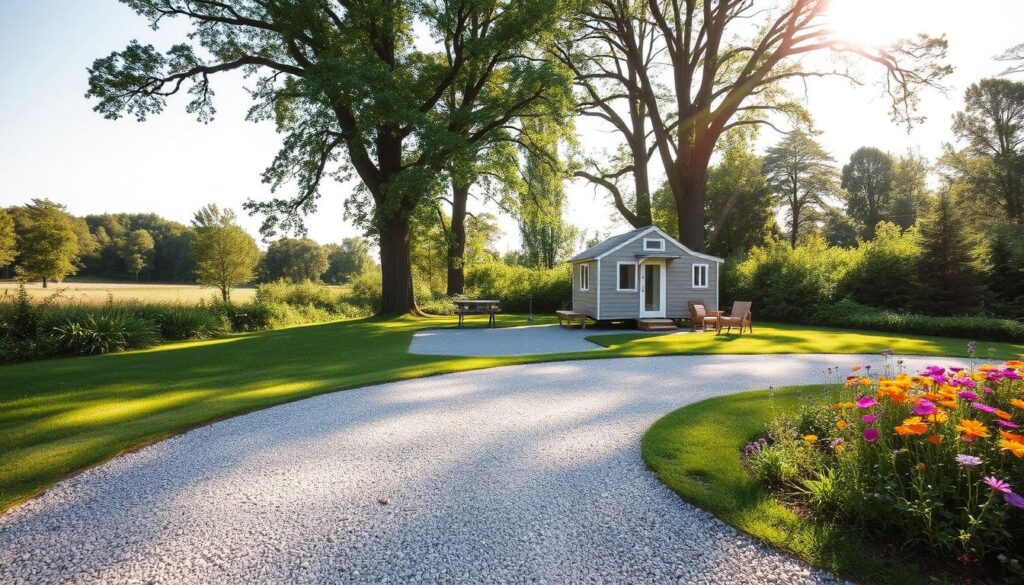
RV parks, campgrounds, and tiny home communities
Compare parks, private campgrounds, and dedicated communities for hookups, long-term leases, and rules. Whispering Aspen Village in Colorado sells lots set up for tiny homes with utility hookups and clear covenants.
Many towns limit how long an RV or tiny house may stay in one spot—two-week move rules are common. Get those limits in writing before you commit.
Urban, suburban, and rural placement considerations
Urban lots often bring higher fees, tight access, and stricter restrictions. Suburban and rural areas usually offer more space and flexible long-term placements.
- Check access: road grade, turning radius, and overhead clearances for your vehicle and trailer.
- Confirm rules on skirting, decks, sheds, and whether you may use planks or blocks to protect tires while parked.
- Ask about winter access, snow policies, and emergency services near the site.
“Always get parking rules and renewal terms in writing and keep proof you can move the rig if required.”
Power options, energy needs, and off‑grid capability
Power choices shape daily comfort and determine how far your tiny house can roam.
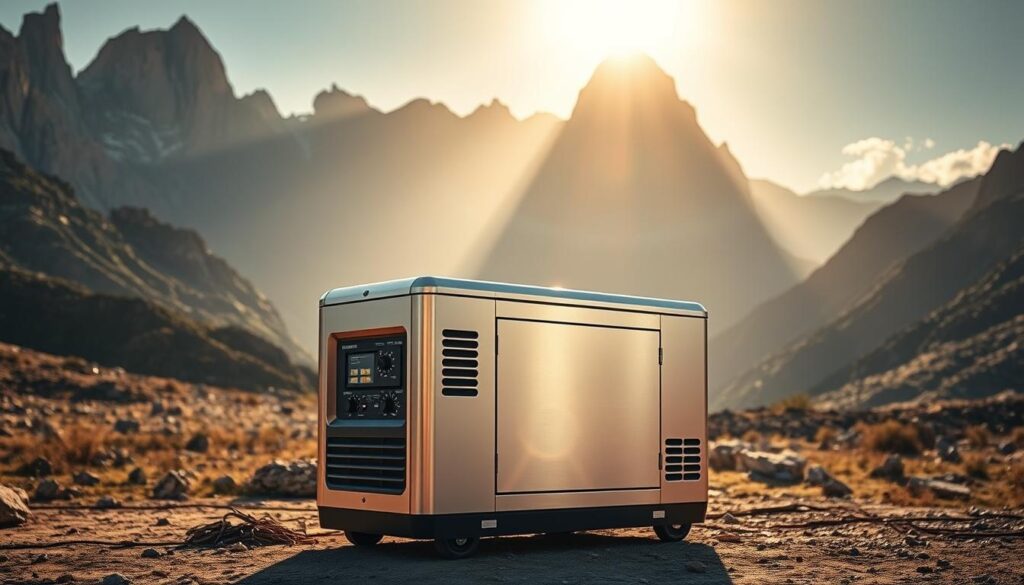
Start by tallying daily watt‑hours for lighting, fridge, laptops, and heating. That total sets the solar array and battery capacity you need.
Pairing systems is smart: solar plus batteries handles regular use, while propane or diesel covers winter heat and heavy loads. Add a generator or shore power as backup for cloudy stretches.
- Use efficient appliances and LED lighting to shrink energy draws and cut battery size.
- Include tilt or portable panels if you winter in low sun or park in shade.
- Consider alternator or DC‑DC charging from your vehicle for driving recharge.
Secure batteries in vented enclosures and follow manufacturer rules for chargers, fuses, and cable sizing. Plan fuel storage with proper clearance and ventilation for heaters or stoves.
| System | Typical role | Pros | Cons |
|---|---|---|---|
| Solar + batteries | Daily power, silent use | Low running cost, quiet | Needs sun; higher upfront cost |
| Propane / diesel | Heating and backup | Reliable in cold, compact energy | Storage, ventilation, refills |
| Generator / shore | Reserve power, cloudy days | High output on demand | Noisy, fuel costs |
“Right‑sizing systems saves weight and keeps your trailer and towing vehicle manageable.”
Water, waste, and utilities planning
Plan your water and sewer approach early—these systems drive cost, weight, and legal needs. A clear strategy avoids surprises and keeps daily living reliable.
Freshwater sourcing, gray water, and black water solutions
Map how you will get fresh water: municipal hookups, hauled tanks, or rainwater catchment where allowed.
Pair any collection with filtration or treatment and confirm local rules before relying on rain capture.
Size gray and black tanks to match cooking, showering, and dishwashing habits. Larger tanks or more frequent dumps suit heavier use.
Composting toilets and local waste laws
Composting toilets can cut black water needs and save space and weight.
Check local requirements first—many jurisdictions still require conventional black-water systems or have strict discharge rules.
- Plan winterization: insulated lines, heat tape, and tank heaters.
- Balance tank placement for proper weight across axles and the tongue.
- Account for energy needs of pumps and heaters in overall energy planning.
- Label valves and panels so everyone in the home can operate systems safely.
“Early utility planning keeps your tiny home functional, legal, and light enough for safe towing.”
Types of portable homes: options to match your life
Different shells and chassis offer distinct trade-offs in weight, service access, and comfort. Pick the style that fits your travel pattern, storage needs, and appetite for maintenance.
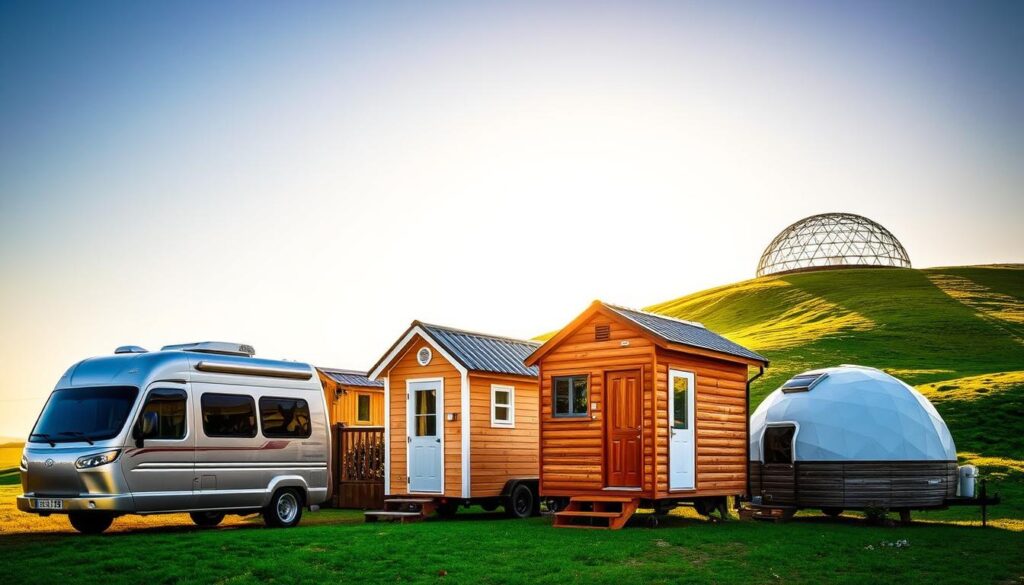
Tiny house on wheels, travel trailer, and RV
Tiny house on wheels (THOW) gives a residential feel and full-height interiors. Verify towing capacity and plan whether you will move it yourself or hire pros.
Travel trailers are lighter and easier to hitch. They often offer many floor plans at lower cost and simpler service networks.
RVs are self-contained and ideal if you want plug-and-play mobility. Choose size and class based on fuel, amenities, and campground access.
Skoolies and Sprinter vans
Skoolies let builders customize massively, but they can be heavy and face stricter parking rules.
Sprinter vans are nimble and stealthy for one or two people. Layouts must be tight — sleeping, cooking, and storage demand smart design.
| Type | Weight / capacity | Power & systems | Best for |
|---|---|---|---|
| THOW | Heavier; needs strong tow vehicle | Full-size options; room for solar | Residential feel, longer stays |
| Travel trailer | Lighter; easier towing | Common RV hookups and parts | Budget-friendly travel and variety |
| RVs / Vans / Skoolies | Varies: van light, skoolie heavy | Integrated systems; van roof limits | From minimalist to full-time living |
- Try renting or test-driving before you buy to feel handling and daily ergonomics.
- Compare cooking and power needs across types—galleys differ widely.
Interior design, layout, and space optimization
Smart layout choices turn tight footprints into flexible, pleasant living areas.
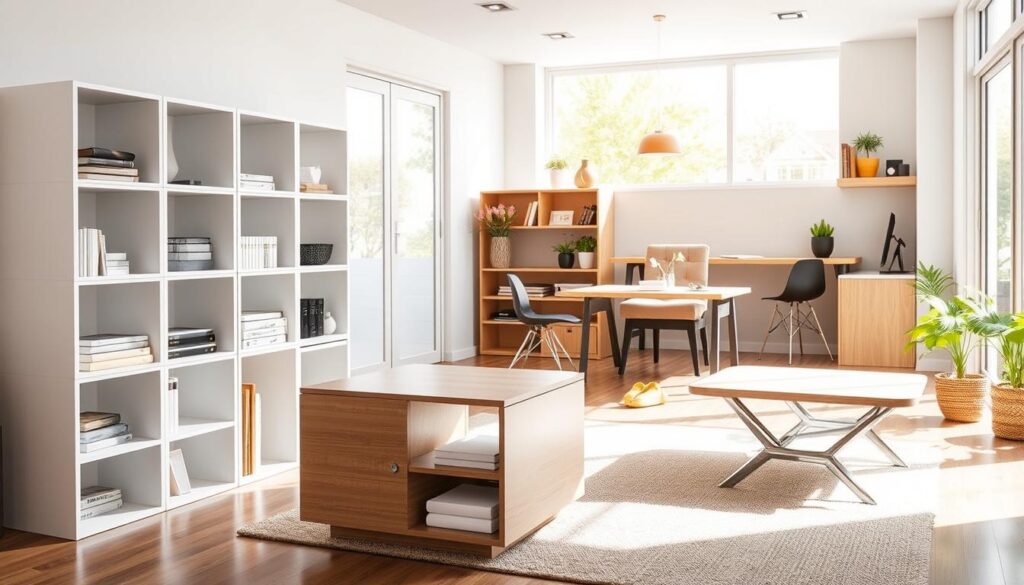
Open plans create sightlines and shared light, while subtle zoning defines sleep, work, and dining areas without full walls.
Open floor plans and multi‑purpose rooms
Use furniture that works double duty: sofa beds, fold-down tables, and ottomans with storage multiply function in the same square footage.
Keep circulation clear. Even a few extra inches of walkway makes daily living feel effortless.
Light, color, and mirrors
Favor light, neutral palettes and large mirrors to bounce natural light and expand perceived space.
Place windows, clerestories, or skylights where they bring views and cross‑ventilation without eating valuable wall storage.
- Integrate storage into stairs, benches, and toe‑kicks to hide clutter.
- Choose slim counters, pocket doors, and low‑profile hardware to save visual room.
- Plan layered lighting—ambient, task, accent—so cooking, reading, and relaxing are all comfortable.
“Design for easy upkeep: durable, wipeable surfaces keep the house looking fresh under heavy use.”
Revisit the layout after a trial period. Small tweaks often unlock better workflows and make tiny home living more enjoyable.
Smart storage, furniture, and organization systems
Smart storage turns tight layouts into calm, usable rooms. Build up before you build out: tall cabinets, floating shelves, and wall hooks free the floor so the living area feels larger and moves easier.
Vertical solutions and multi‑purpose furniture
Install fold-down desks and tables that disappear when not in use. Use benches or stair drawers as hidden compartments for linens and tools.
Pick furniture that works hard: convertible sofas, Murphy beds, and nesting tables give extra function without bulk.
Bins, labels, and routines that keep clutter in check
Standardize stackable bins and label each one so items return to their place quickly. Drawer dividers make utensils and tech easy to find and store.
Adopt simple habits: rotate seasonal gear off-site, run a weekly reset for laundry and pantry checks, and review storage quarterly to donate unused items.
“Clear systems beat brute force: small, repeatable routines keep space tidy and life calm.”
| Strategy | Use | Quick benefit |
|---|---|---|
| Tall cabinets & shelves | Books, dishes, folded clothes | Frees floor area; improves circulation |
| Hidden compartments | Linens, tools, seasonal gear | Keeps common zones uncluttered |
| Pegboards & hooks | Kitchen tools, coats, bags | Keeps counters clear and items visible |
| Bins & labels | Pantry, gear, electronics | Speeds finding and returning items |
- Use drawer organizers and dividers for small items.
- Limit new purchases with a “one-in, one-out” rule to control accumulation.
- Keep cleaning supplies compact and centralized to encourage quick resets.
Kitchen and cooking trade-offs in tiny homes
Small kitchens demand deliberate food habits and layout choices. Limited fridge and pantry space reshapes what you buy and how often you shop.
Expect smaller refrigerators and fewer burners. Plan meals around fresh ingredients and quick turnover rather than bulk storage.
Reduced refrigeration, pantry limits, and meal planning
Keep staple dry goods in airtight, labeled containers to save room and cut waste.
Set a weekly shopping rhythm so you use fresh produce before it spoils. Batch-cook simple one-pan meals to cut dishes and cooking time.
Appliance choices, burners, and ventilation
Pick appliances that match your energy setup: induction cooktops use less idle power and are safer in small quarters.
Ventilation matters. A ducted range hood or strong fan removes moisture and odors quickly. Poor extraction lets smells linger and raises humidity.
| Constraint | Smart choice | Benefit |
|---|---|---|
| Small fridge | Compact fridge + weekly shopping | Fresher food; less waste |
| Limited counter | Portable burners & fold-down prep | More usable work surface |
| Power limits | Low-watt appliances; shore power for heavy use | Matches system requirements; avoids overload |
- Use multi-use cookware and lightweight pots for easy storage and towing.
- Consider outdoor grilling to expand capability without heating the interior.
“Designing the galley around habits, not gear, makes cooking enjoyable in a tiny house.”
Budget, total cost of ownership, and value
A realistic budget separates hopeful plans from sustainable living for tiny house projects. Start by comparing build versus buy costs and expect higher per‑square‑foot pricing under 500 sq ft—roughly $201/sq ft versus about $96/sq ft for larger small homes.
Build vs. buy, materials, and long‑term maintenance
DIY builds can hit averages near $25,000 but add time and unpredictable delays. Hiring pros raises upfront cost but speeds the process and helps with permits.
- Choose durable materials and moisture‑resistant finishes to lower repairs and improve resale value.
- Plan for lifecycle replacements: batteries, inverters, heaters, and appliance swaps affect ongoing cost.
Resale, land, and ongoing ownership costs
Without land, tiny homes often don’t track local real estate appreciation. Lot ownership in a community can stabilize costs and add long‑term security.
“Count insurance, registration, campground fees, winterization, and towing fuel into your annual numbers.”
| Item | Typical annual cost | Notes |
|---|---|---|
| Insurance & registration | $500–$2,000 | Varies by classification |
| Maintenance & replacements | $500–$1,500 | Batteries, appliances, tires |
| Site or lot fees | $600–$6,000 | Short‑term parks vs. owned lot |
Tip: keep a 10–20% contingency fund for permit delays, material shortages, or design changes to protect your overall budget and preserve long‑term value.
DIY, professional help, and the build process
Honest self‑assessment of your hands‑on skills guides whether this project is DIY or needs pros.
Start by listing tasks you can do and tasks you cannot. That shapes scope, budget, and schedule for your tiny house build.
Sequence the work: framing, systems, insulation, then finishes. Leave clear pauses for inspections at each stage.
Skills, scope, and realistic timelines
Set milestones with buffer time for weather and supply delays. Small mockups for loft ladders or folding furniture prevent costly rework.
When to hire pros and document for compliance
Hire licensed electricians, gas fitters, and structural pros for critical systems. Inspections and signed reports often matter for insurance and resale.
- Use materials rated for vehicle use where needed and keep receipts.
- Draft simple plans and keep a change log for reviewers and buyers.
- Keep a shared folder of manuals, photos, and serial numbers.
| Step | Who | Why it matters |
|---|---|---|
| Framing | DIY/pro | Structure and weight balance |
| Systems (elec/plumb) | Licensed pro | Safety, code, insurance |
| Insulation & finishes | DIY possible | Comfort and weight control |
“Document the build and plan inspections — insurers and future buyers will thank you.”
factors to consider when choosing a portable home
Anchor your search in zoning, mobility limits, and practical daily use before you fall in love with a floorplan. That early check keeps surprises small and helps align systems, layout, and budget with real life.
Legal fit, mobility, utilities, design, and insurance
Make sure your shortlist passes local rules: zoning, permits, and insurability often shape what you can own and where you can park. For units on wheels, ask about RVIA or inspection requirements early.
Match mobility to routine. Frequent movers need lighter builds and easy service access. Long-stay dwellers can pick heavier, more comfortable layouts with bigger storage.
Plan utilities so systems meet local rules: solar plus batteries, shore power, freshwater sources, and waste handling all affect daily life and legal compliance.
Family plans, work needs, and level of resources
Think about future family growth, remote work, and storage needs now. Decide how much of the build you can DIY and where professional permits or inspections are essential for safety and insurance.
- Build a checklist: legal fit, towing capacity, utilities, kitchen use, storage, and upkeep.
- Right-size choices to your money, time, and skills so you avoid costly retrofits.
- Keep a lessons-learned log from test stays to refine the final plan.
“Confirm insurance requirements early for dwellings on wheels and DIY builds; documentation often smooths approval.”
Make sure it fits your life today—and the way you want to live tomorrow
Make sure you try a real-life run before you commit. Try a weekend in a similar rig to see if space, storage, and daily routines fit your life.
Think in seasons and stages: will one layout flex for work changes, pets, or kids? Build margin for learning. Practice towing, setup, and breakdown until it feels routine.
Choose options that lower friction: reliable utilities, easy maintenance, and parking you can access year-round. Inspect tires, wheel bearings, and hitch gear before every move.
Keep a short checklist of what worked and what didn’t. In the end, pick the house that supports your best days most of the time—comfort, mobility, and peace of mind matter more than perfection.
Leave a Reply