
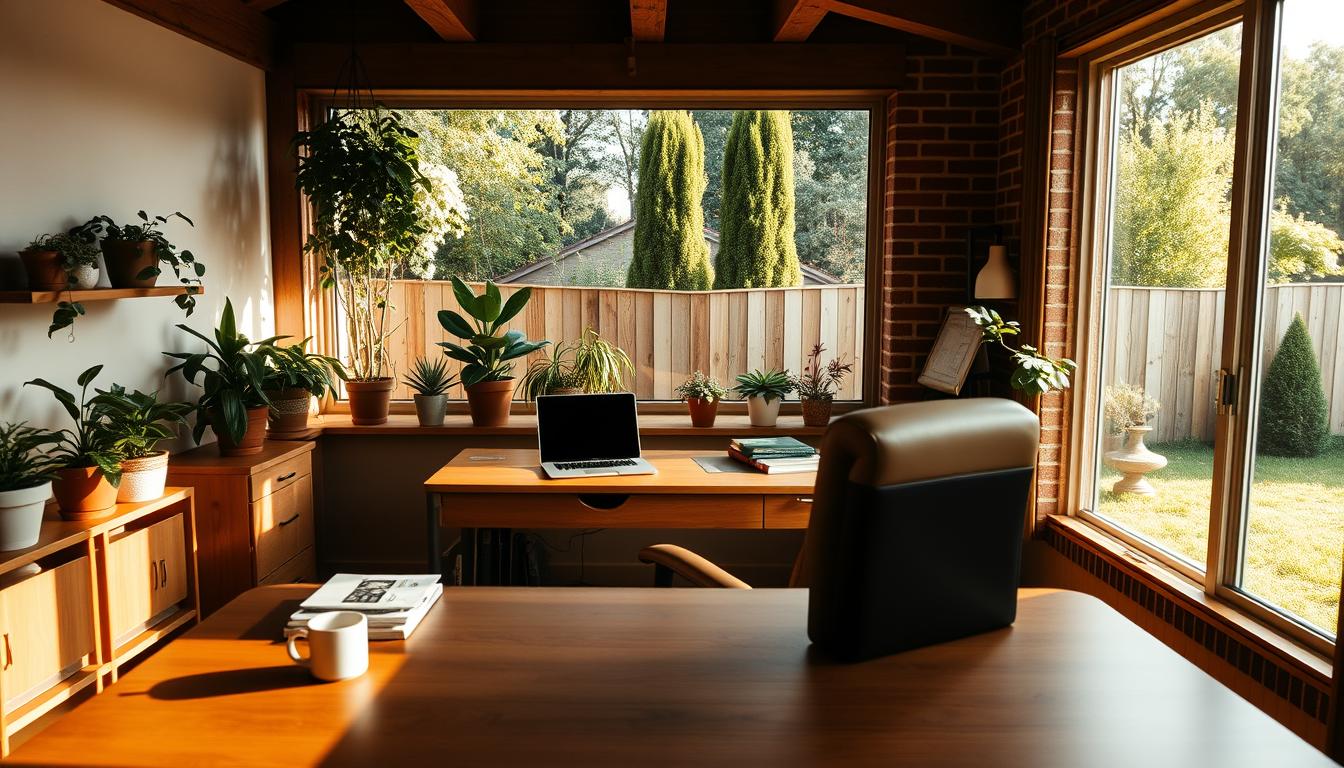
Turn a small structure into a productive home hub. This guide walks you from idea to a finished workspace that sits in your yard and helps you get more work done in less time.
You’ll learn planning, permits, construction, finishing touches, tech setup, and budget choices tailored for a home setting. We explain the difference between a simple storage shed and a purpose-built studio, and how thoughtful design makes the space comfortable year-round.
Expect clear options: modern studios with large windows, garden-inspired retreats, and guest-ready layouts so you can find perfect fits for your lifestyle. We also outline three build paths—prefab, kit, or fully custom—and how each affects time, cost, and effort.
This resource targets United States readers and notes common permitting, utility planning, and climate considerations. First-time builders get reassurance: success comes from a solid plan, the right materials, and sensible steps whether you hire help or DIY parts of the project.
Key Takeaways
- A dedicated structure can create a quiet, focused workspace and improve your daily routine.
- Follow a step-by-step path covering planning, permits, build choices, and tech setup.
- Choose prefab, kit, or custom builds based on time, budget, and effort.
- Thoughtful design turns a simple shed into a year-round studio or guest space.
- This guide is U.S.-focused for permits, utilities, and regional climate needs.
Why a Home Office Shed Is the Smart Move Right Now
Moving work out of the main house into a compact studio sharpens routines and cuts interruptions. A dedicated home office reduces noise and keeps common rooms free for family life.

That mental separation matters. When your workspace sits apart, it signals start and stop times. That helps you get work done and restore balance at home.
Compared with a major remodel, a well‑insulated shed can be faster and more affordable. It still delivers a professional feel and supports upgrades like smart climate control or solar panels.
A purpose-built studio is flexible. Pick a minimalist layout for focused work, add storage for shared offices, or set a guest bed for occasional stays. Natural light and fresh air in a small external space often boost mood and comfort compared with improvised indoor setups.
- Quiet, focused space that reduces household disruption.
- Cost-effective solution versus interior renovations.
- Flexible design that adapts as your needs change.
Plan Your Perfect Fit: Design, Site, and Permits
Begin with practical checks—sun, drainage, access, and code limits—before finalizing design. This keeps the build efficient and avoids costly delays.
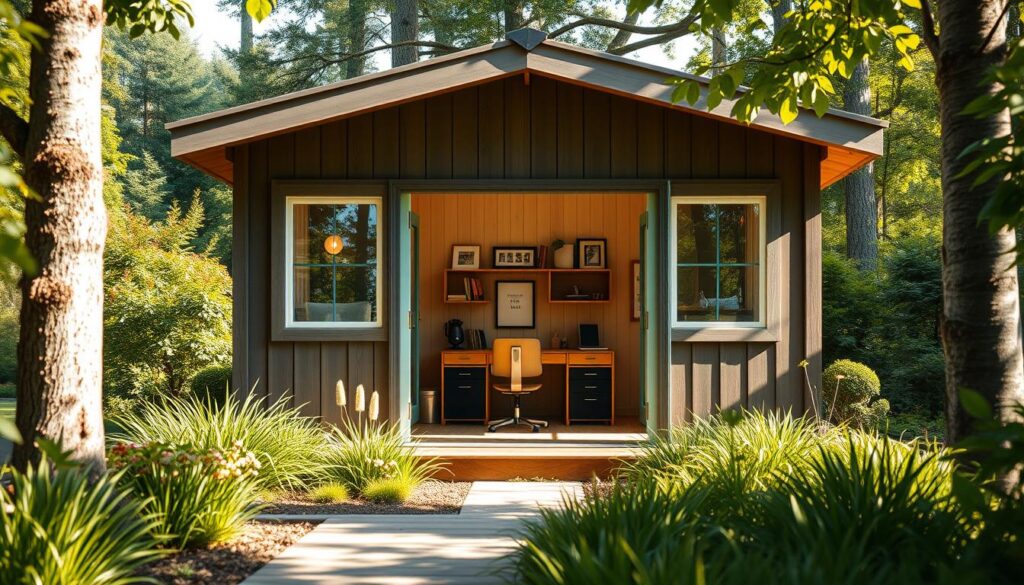
Site selection, setbacks, and utilities planning
Walk the lot and note sun paths, shade, and where water drains. Balance privacy with easy access to the house for power and data runs.
Call 811 before you dig and plan trench routes for electricity, Ethernet, or mini-split line sets. Choose a foundation—piers, skids, or slab—based on soil, frost depth, and moisture control.
Permit basics in the United States and ADU considerations
Check local size thresholds and height limits. Many municipalities require permits for new structures and may classify yours as an ADU.
An ADU can trigger separate utility metering, fire egress rules, and extra inspections. A non-dwelling office shed still needs code-compliant electrical work.
Climate control, insulation, windows, and roof choices
Pick insulation that fits your region—spray foam, rigid foam, or fiberglass—and add airtight sealing. Specify an efficient mini-split sized for your space.
Orient glazing for daylight without glare and include operable windows for ventilation. Choose a roof assembly with durable waterproofing and the right snow/wind rating.
Style goals: modern studio, garden office, or guest-ready space
Decide early on the studio style so door placement, glazing, and finishes match needs. Prefab options like WorkPod can be assembled in 2–3 days and often arrive pre-wired with adaptable foundations for uneven sites.
- Feasibility check: confirm delivery access and HOA rules.
- Plan wiring now: lay interior power circuits and low-voltage runs before closing walls to avoid lost days later.
backyard office inspiration: Styles, Sheds, and Studio Ideas
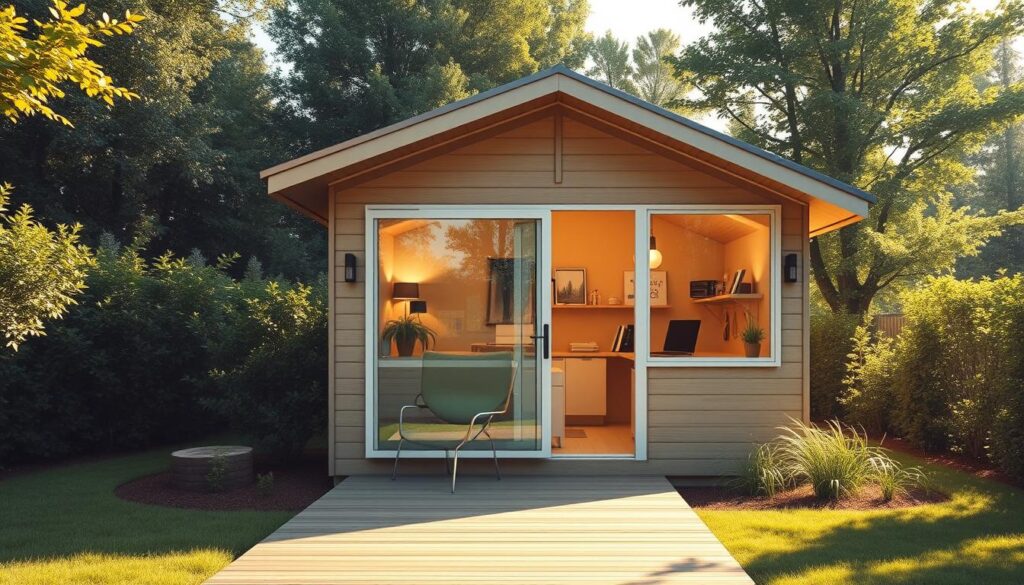
From glass‑front pods to two‑story hybrids, today’s options make it easy to match form and function. Pick a prefab pod for speed or a customizable unit when you want future add-ons and big windows.
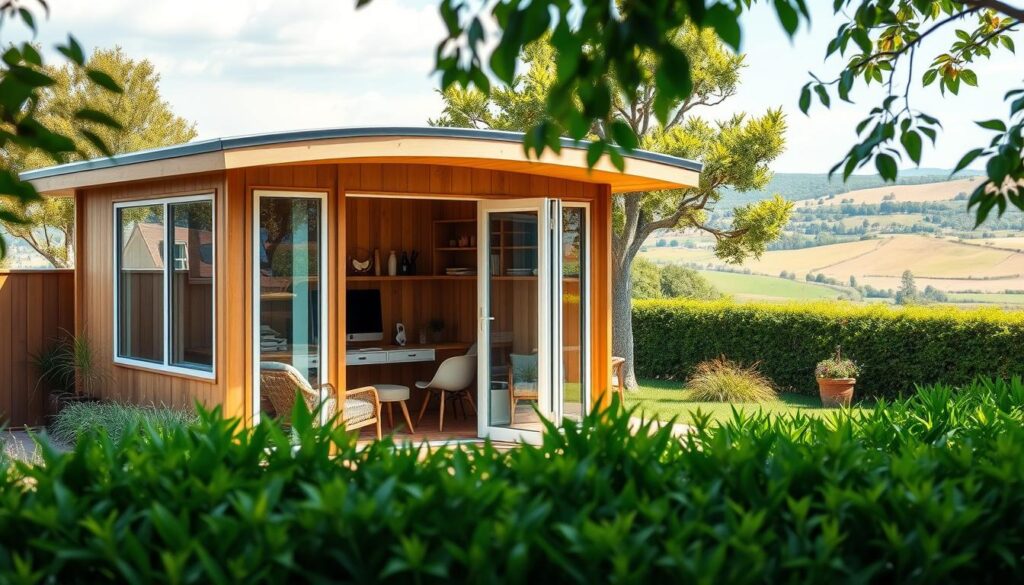
Prefab standouts
Autonomous WorkPod arrives pre-wired with floor-to-ceiling glass doors and sound insulation for a focused workspace. It assembles in 2–3 days and works on engineered foundations for uneven sites.
WorkPod Solar adds rooftop panels and upgraded insulation for energy efficiency. The WorkPod mini fits small yards and arrives partly built to speed setup.
Customizable and design-forward builds
TUFF SHED lets you add gutters, larger windows, and tailor sizes to fit desks and storage. Summerwood models—Urban Studio, Quadra, Catalina, Windsor—bring architectural character and a full design center for customization.
Themes and two-story ideas
Heartland offers themed options—from a lush garden office to a modern minimalist or pub‑vibe hangout. Legacy two‑story sheds split storage below and a bright studio above for a hybrid guest house solution.
For tight lots, consider ultra-narrow studios from Serge Schoemaker or glass-forward pods like POD SPACE. Compact choices like BACKYARD ROON add a small terrace to extend your usable space.
Tip: Match glazing, door orientation, and finishes to your daily routines so the studio supports how you work and feels personal every day.
Choose Your Build Path: Prefab, Kit, or Custom
Deciding between prefab, a DIY kit, or a custom build sets the tone for cost, speed, and finish level. Think about how quickly you need usable space, how much customization matters, and whether yard access can handle delivered modules. Document key decisions on structure, electrical, and climate control to keep permits and budgets on track.
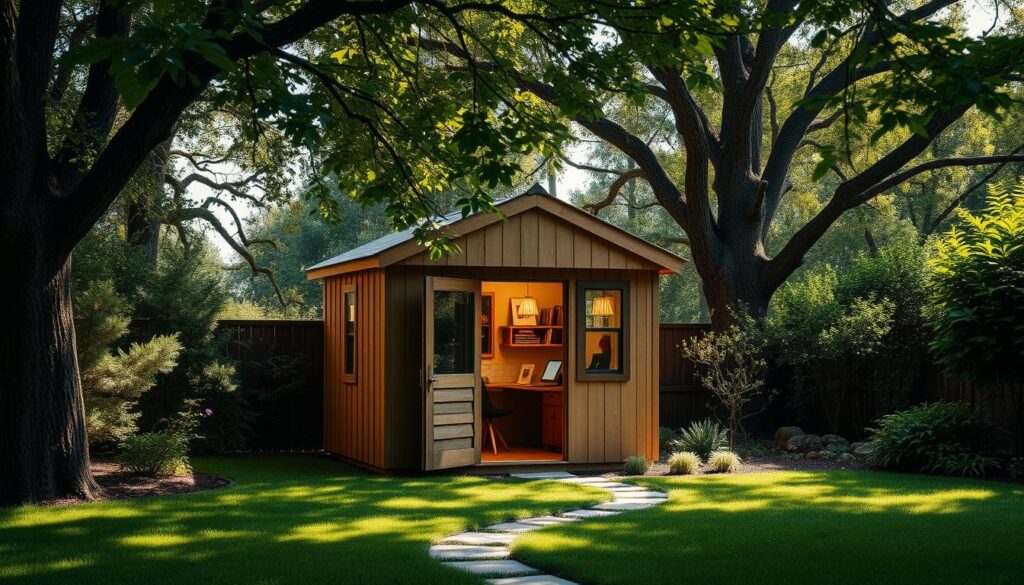
Fast-track prefab studios with pre-wiring and quick installation
Prefab units like the Autonomous WorkPod arrive with engineered foundations, pre-wiring, and a typical 2–3 day assembly. That predictability is a great solution when you want a polished, move‑in ready space with minimal disruption at home.
DIY kits you can assemble in days with step-by-step guides
Brands such as Summerwood sell kits with pre-cut parts, clear instructions, and optional pro installation. Kits are budget-friendly and let homeowners control finishes, windows, and interior details without starting from scratch.
Fully custom shed office for unique needs and odd-shaped yards
When lots are narrow or irregular, architects like Serge Schoemaker design tailored narrow studios that fit odd sites. Choose custom when glazing, integrated storage, or an exact aesthetic matters more than speed.
- Fit guide: Prefab = speed and simplicity; kits = cost control plus customization; custom = precise tailoring.
- Logistics: Reserve delivery windows, plan inspections, and schedule utility hookups early.
- Value: Invest in durable materials and good insulation now to cut maintenance and energy costs later.
Build It Right: Step-by-Step Construction Workflow
A clear, stepwise approach to foundation, framing, and finishes saves time and money. Follow phases so inspections, trades, and deliveries align. This reduces rework and helps you get work done faster.
Foundation and leveling for long-term stability
Begin with layout, excavation, and a stable foundation—skids, piers, or a slab. Ensure square corners and precise leveling so the shed remains true over time.
Note: Some prefab pods use an engineered foundation that fits uneven sites, cutting site prep time.
Framing, doors, and windows installation for natural light
Frame floors, walls, and roof with careful measurements. Size door and window openings to balance daylight and wall storage. Install frames plumb, add flashing, and seal to prevent drafts.
Insulation, wiring, and interior finishes for a quiet workspace
Rough-in electrical with dedicated circuits and GFCI where needed. Run Ethernet for stable connectivity. Insulate ceilings and walls, air-seal gaps, and add vapor control for comfort.
Exterior siding, roof, and weatherproofing for all seasons
Choose siding and trim that match your house and maintenance needs. Use durable roofing with proper underlayment, ice and water shield, and venting. Weatherproof all penetrations and test before move-in.
| Phase | Key Actions | Why it matters |
|---|---|---|
| Foundation | Layout, level, skids/piers/slab | Stability, longevity |
| Envelope | Frame, windows, doors, flashing | Light, ventilation, leak prevention |
| Systems | Wiring, circuits, Ethernet | Power reliability, connectivity |
| Finish | Insulate, drywall, floors | Comfort, acoustics, aesthetics |
| Weatherproof | Siding, roof, sealants | All-season protection |
Outfit Your Office Studio: Interior Design and Tech Setup
A smart interior plan makes even compact studios feel roomy and focused.

Start with ergonomics. Choose an adjustable desk and a supportive chair so you can work comfortably all day. Add storage that keeps your office space tidy and reachable.
Light in layers. Big windows or a skylight give natural daylight. Use warm-dim LEDs and a focused task lamp for evening work and video calls. This mix reduces glare and keeps colors natural on camera.
Plan power and connectivity. Map outlets and hide cables to keep the floor clear. Use a Wi‑Fi extender or a wired Ethernet run for stable video calls and large uploads.
Tech, security, and acoustics
Integrate voice-controlled lighting, a smart thermostat, and presence-based cameras or locks for secure, hands-free control. Add rugs, panels, or shelves to soften echo when you record or take calls.
| Area | Recommendation | Why it helps |
|---|---|---|
| Ergonomics | Adjustable desk, ergonomic chair, accessible storage | Comfort and productivity |
| Lighting | Windows/skylight + warm-dim LEDs + task lamp | Clear video, reduced eye strain |
| Connectivity | Ethernet run or Wi‑Fi extender, cable management | Reliable calls and fast uploads |
| Security & Smart | Smart locks, cameras, voice lighting | Convenience and remote control |
Try a setup day to check camera angles, glare from the window, and device placement before you finalize. Small tests save time and help you get work flowing smoothly in your new studio.
Budget, Value, and Time-Saving Solutions
A clear money plan helps you choose whether to adapt an old structure or buy a ready-made pod.
Repurpose vs. prefab: If a shed is structurally sound, repurposing often costs less up front. Hidden rot, poor insulation, or outdated wiring can erode savings. Prefab pods like the Autonomous WorkPod arrive pre-wired and often assemble in 2–3 days, cutting coordination time and labor costs.
Think lifecycle value: Invest in insulation, tight air sealing, quality windows, and a durable roof to lower operating costs and boost comfort.

Energy and timeline upgrades
WorkPod Solar or rooftop PV add-ons offset running costs. Pair solar with a mini-split and a smart thermostat for efficient climate control.
Summerwood kits can be assembled in days or installed by pros, blending cost control with customization. POD SPACE pods may run near $30,000 depending on glazing and interior finishes; TUFF SHED offers flexible layouts with large windows.
| Choice | Typical timeline | Key cost drivers |
|---|---|---|
| Repurpose shed | Days–weeks | Repair, insulation, wiring |
| Prefab pod | 2–7 days delivery & install | Pod price, transport, hookups |
| Kit build | Days–weeks (DIY) | Parts, optional pro install |
- Budget for trenching and panel upgrades if power runs far from the home.
- Include finishing costs—flooring, paint, storage—so the space is camera-ready day one.
- Keep a 10–15% contingency for surprises and weatherproofing improvements.
Bring Your Backyard Office to Life and Get Work Done
Pick two to three strong concepts, then sketch simple layouts to test light, storage, and daily flow.
Shortlist a minimalist home office studio, a garden office, or an art studio, and draw basic plans to verify desk placement, windows, and storage.
Turn favorite office shed ideas into an action plan: confirm budget, pick a build path (prefab, kit, or custom), and schedule delivery and install dates to keep momentum.
Remember flexibility: a sleeper sofa or wall rails can convert a shed office into a guest house or maker space when needed.
Quick readiness checklist: tight roof and windows, reliable power and data, a comfy chair, layered lighting, and storage tuned for a perfect workspace.
Get work done by booking milestones, notifying the house about noisy phases, and running a one-week comfort audit to tweak glare, seals, and temperature. Pick your top concept today and take the first step toward a perfect fit.
Leave a Reply