At first glance, it may seem like a paradox: if a generator produces electricity, doesn’t it need electricity to start? The truth is that generators don’t create energy from nothing — they convert mechanical energy into electrical energy.
The Basic Principle
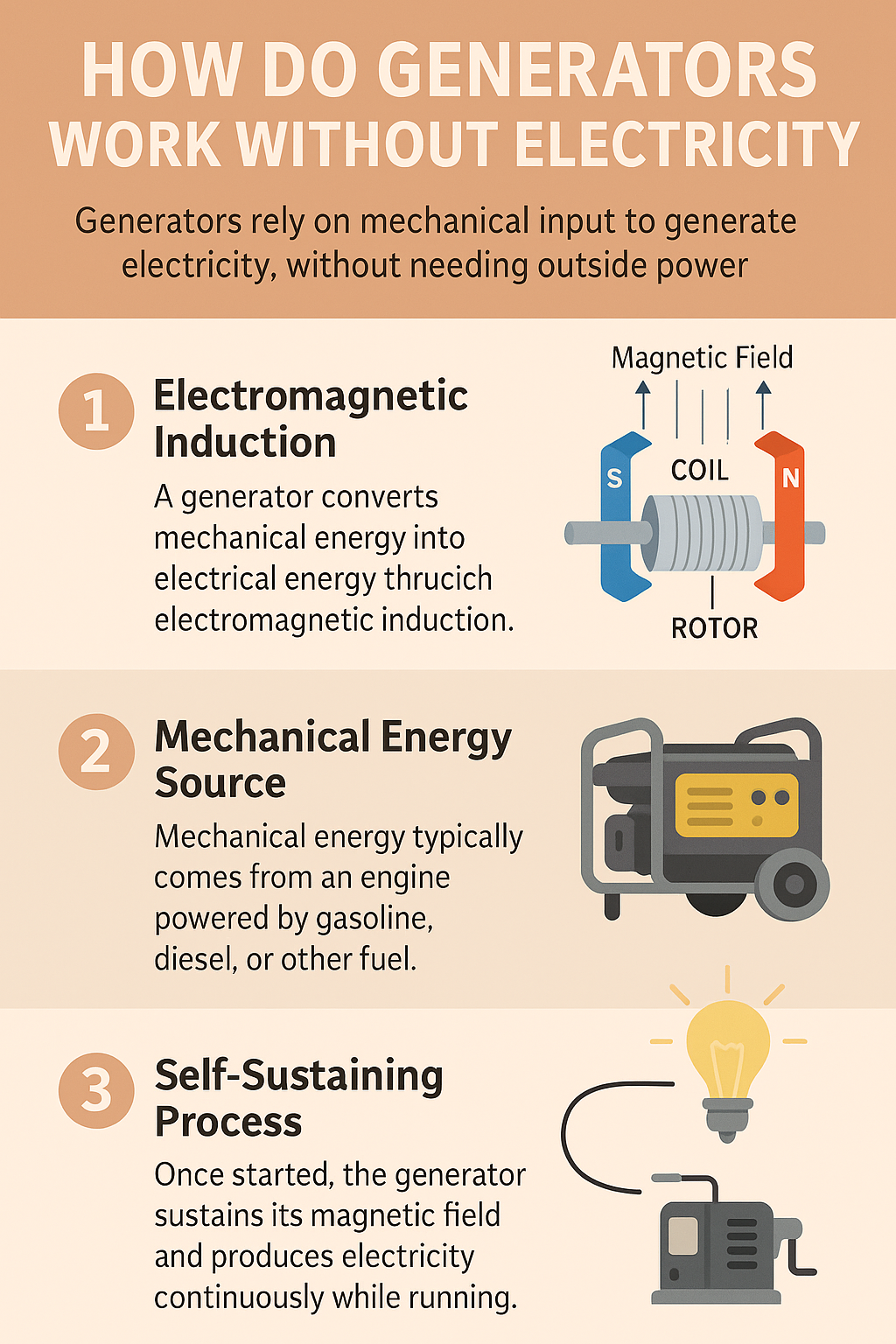
Generators operate on electromagnetic induction. When a coil of wire moves in a magnetic field (or vice versa), it creates an electric current. This principle was discovered by Michael Faraday in 1831, and it’s the foundation of nearly all power generation today.
Where Does the Energy Come From?
A generator doesn’t rely on electricity to run — it relies on mechanical input to turn its rotor. This mechanical energy usually comes from:
- Gasoline, diesel, or natural gas engines (common in home backup generators)
- Turbines powered by steam, water, or wind (as in power plants)
- Human or animal power (like old hand-cranked generators or bicycle-powered chargers)
That engine or turbine spins the generator’s rotor, which moves a magnetic field past copper coils, inducing an electric current.
But Don’t Generators Need Electricity to Start?
Some large generators do need a small electrical charge to excite their magnetic fields before they can produce power. This is called field excitation.
- In small home generators, this is usually built-in, with residual magnetism in the coils providing enough initial charge.
- In big industrial power plants, a battery system provides the excitation current to “kick-start” the process.
Once running, the generator sustains its own field and produces continuous electricity as long as the engine keeps turning.
Everyday Example
Think of it like pedaling a bicycle with a headlamp attached:
- Your pedaling (mechanical energy) spins a tiny generator (dynamo).
- The spinning magnets inside produce electricity.
- No electricity was needed to start — only your motion.
Final Thoughts
Generators don’t “make electricity out of nothing.” Instead, they convert mechanical energy into electrical energy. That’s why even without grid electricity, a portable generator or power plant can start producing power, as long as there’s a fuel source (or another way to spin the rotor).
Leave a Reply