
Switching to renewable energy is a big step for homeowners. The cost of solar panels can be high. On average, a Canadian home needs about $15,000 or more.
But, the long-term benefits of clean, renewable solar power are worth it. Knowing the return on investment (ROI) for solar panels is key. It helps you decide on home energy solutions.
By looking at the financial side of solar energy, you can see if it’s right for you. A detailed look at the costs and benefits can guide your choice.
Key Takeaways
- Understanding solar panel ROI is key for homeowners.
- The initial cost of solar panels is high.
- The long-term gains are often greater than the start-up costs.
- Doing a full financial check is important for smart choices.
- Solar energy can give a big return on investment.
Understanding Solar Panel ROI
Understanding the return on investment (ROI) of solar panels is key for homeowners. They should know why solar energy is a smart financial choice.
What Makes Solar a Financial Investment
Solar panels are a big investment. They save money on energy bills and offer extra benefits. These benefits can make the initial cost worth it.
Short-Term vs. Long-Term Returns
Solar panels offer quick and long-term savings. Right away, you save on energy bills and get tax credits. Over time, they last 25 years or more, saving you money for decades.
Beyond Financial Benefits
Solar panels do more than save money. They also help the planet and make your energy use more secure. By going solar, you help the environment and gain energy freedom.
In Canada, solar panels can return 6% to 20% of your investment over their life. This makes them a great choice for many homeowners.
Key Factors That Affect Your Solar Panel ROI
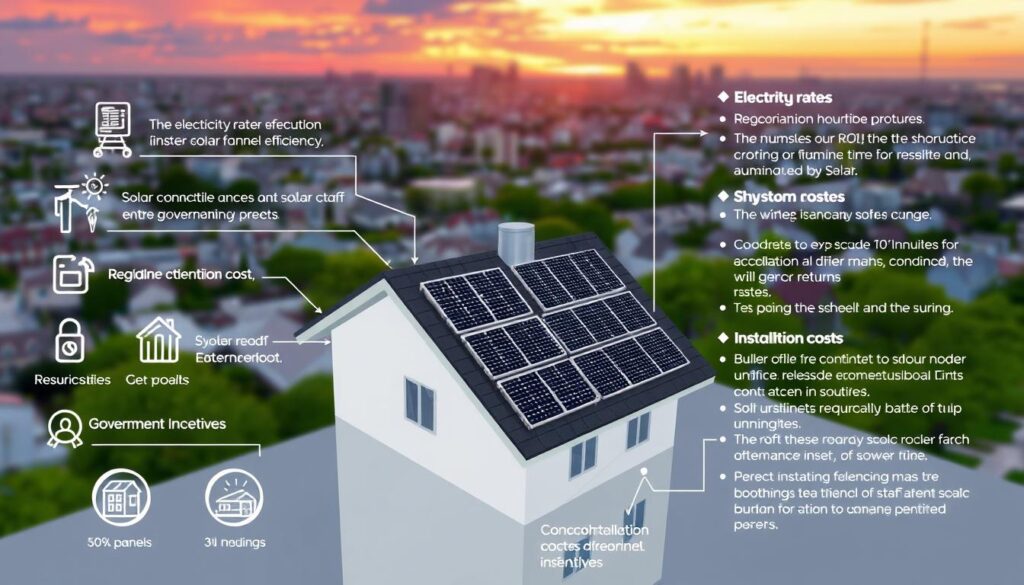
To get the most from your solar panels, you need to know what matters. The return on investment (ROI) is affected by many things. Knowing these can help you make a smart choice.
Initial Installation Costs
The cost to put in solar panels is a big deal. It includes the panels, labor, and other stuff like inverters. Even though it’s expensive upfront, you can get help with the costs.
Available Tax Credits and Incentives
There are tax breaks and other help that can lower the cost. The government and some states give credits for solar panels. Also, some companies offer rebates and other perks.
Financing Options and Interest Rates
How you pay for your solar system affects your ROI. You can buy it outright, get a loan, or lease it. The interest on loans can change the total cost.
Local Electricity Rates
The cost of electricity in your area is key. If rates are high, you save more by using solar. This makes your ROI better.
Solar Production in Your Location
How much sun your place gets matters a lot. More sun means more energy from your panels. This means a higher ROI for you.
| Factor | Impact on ROI | Considerations |
|---|---|---|
| Initial Installation Costs | High upfront costs | Equipment, labor, and installation costs |
| Tax Credits and Incentives | Reduces upfront costs | Federal, state, and utility incentives |
| Financing Options | Varies with interest rates | Loans, leases, and cash purchases |
| Local Electricity Rates | Higher rates increase savings | Utility company rates |
| Solar Production | More sunlight = higher ROI | Location-specific sunlight hours |
How to Calculate Solar Panel ROI for Your Home
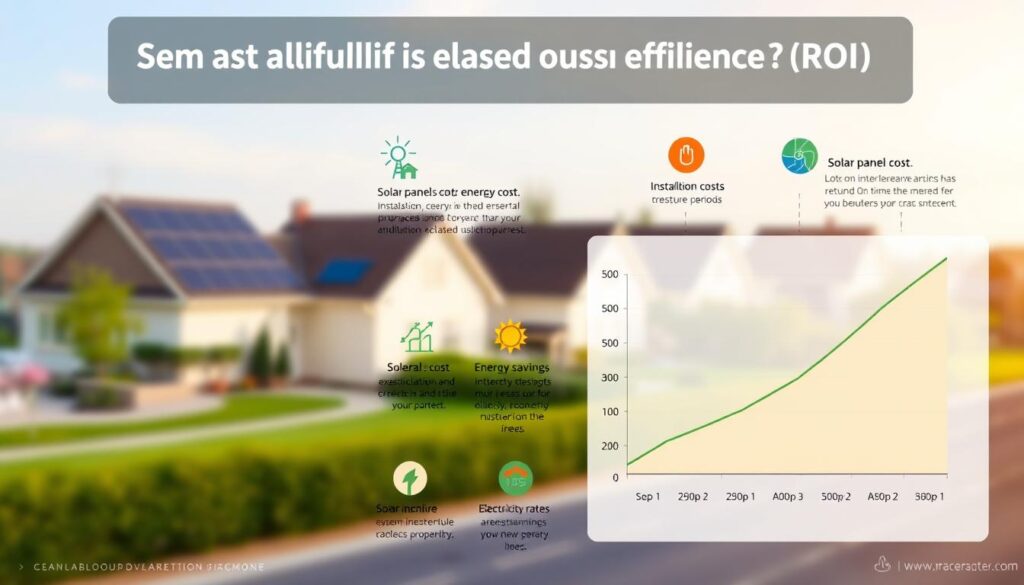
Learning how to figure out solar panel ROI is key for smart energy choices.
Gathering Your Energy Usage Data
First, collect your energy use data. Look at your past electricity bills to see how much you use. This is important for picking the right size for your solar panels.
Determining Total System Cost After Incentives
Then, find out the total cost after incentives. This is the initial cost minus tax credits and rebates. Incentives can really cut down the upfront cost.
Calculating Annual Savings
Next, figure out your yearly savings. Compare your current bills with what they’ll be after solar panels. A solar energy savings calculator can make this easier.
Using Online Solar ROI Calculators
Use online solar ROI calculators to guess your return on investment. These tools look at local rates and how much solar you can make.
Estimating Your Payback Period
Last, guess how long it’ll take for your solar panels to pay off. This time varies, but it’s usually 5 to 10 years.
| Factor | Description | Impact on ROI |
|---|---|---|
| Initial Cost | Total cost of solar panel installation | High |
| Incentives | Tax credits and rebates available | Positive |
| Annual Savings | Savings on electricity bills | Positive |
| Local Electricity Rates | Cost of electricity in your area | Variable |
| Solar Production | Amount of solar energy produced | Positive |
By following these steps and using the right tools, you can accurately calculate your solar panel ROI. This helps you make a smart choice for your home’s solar investment.
Maximizing Your Solar Investment Returns
To get the most out of your solar panel system, make smart choices. Use a solar panel ROI calculator to see how much you might make. This helps you make better decisions.
Doing a deep dive into your solar investment’s finances is key. Look at costs, tax breaks, and local electricity prices. This helps you see if it’s worth it.
Choosing the best equipment and keeping your system running well boosts your returns. Regular checks and updates keep it efficient.
Don’t forget about incentives and tools like solar ROI calculators. They help you get the most from your investment. A smart approach leads to big savings and a greener future.
Leave a Reply