
Do you know how your drinking water is made? There are many ways to purify water. Choosing the right one can be hard.
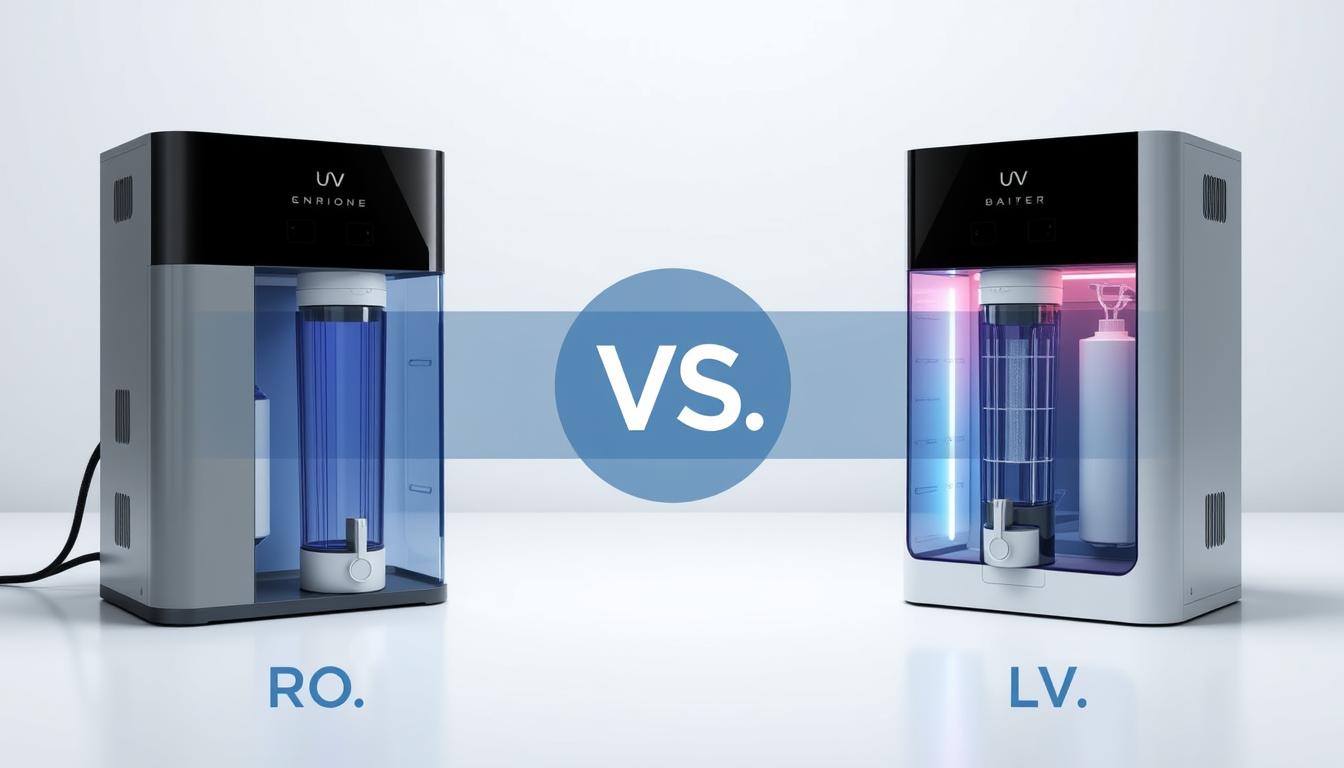
The fight between RO and UV purifiers has been going on for a while. Each has its own good points and bad points. Let’s look at the differences between these two popular ways to purify water.
It’s very important to have safe drinking water for our health. Finding the best purifier technology can be tricky. In this article, we’ll talk about the main differences between RO and UV purifiers. This will help you choose the right one.
Key Takeaways
- Understanding the differences between RO and UV purifiers is key for safe drinking water.
- RO and UV purifiers have their own good and bad sides.
- The best water purifier technology depends on many things.
- Comparing RO and UV purifiers will help you make a smart choice.
- Choosing the right water purification method is very important for our health.
The Importance of Clean Drinking Water in American Homes
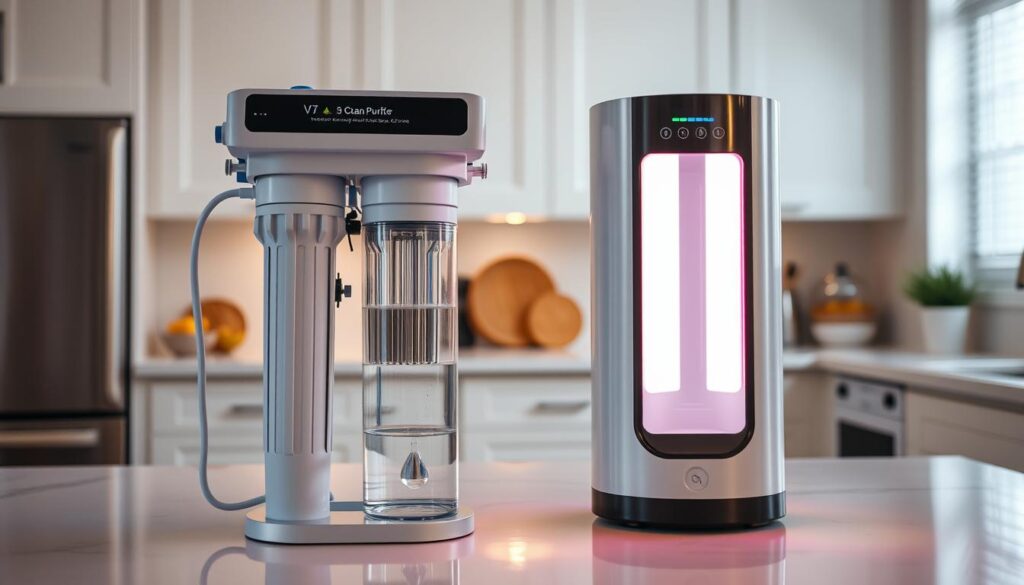
Clean drinking water is key for families in America. It’s important to make sure your tap water is safe. Many homes in the US have water that’s not clean because of bad stuff in it.
These bad things can make water taste bad and even hurt your health. It’s important to know about clean water and what’s in US water. This helps you choose the best way to purify your water.
Common Water Contaminants Found in US Water Supplies
US water can have many bad things in it. These include dissolved solids, heavy metals, bacteria, and viruses. These can come from farms, factories, and old pipes.
Heavy metals like lead and mercury are very bad for you. Bacteria and viruses can make you sick. Knowing about these helps you pick the best water purifier.
Health Risks Associated with Untreated Water
Drinking water that’s not clean can make you sick. It can cause mild stomach problems or even serious diseases like cancer. Waterborne pathogens can give you diseases like cholera and typhoid.
Untreated water can also lead to long-term health problems. Choosing the right water purifier can help keep your family healthy. It makes your home a safer place to live.
How RO Water Purifiers Work: Technology and Benefits

Reverse Osmosis (RO) filtration is a top way to clean drinking water. RO purifiers use a special membrane. This membrane lets water molecules through but blocks big particles and bad stuff.
The Science Behind Reverse Osmosis Filtration
Reverse Osmosis uses pressure to push water through the membrane. This removes bad stuff like dissolved solids and heavy metals. It also gets rid of things that can make water taste bad or smell funny.
Types of Contaminants Effectively Removed by RO Systems
RO systems can handle many bad things in water. These include:
- Dissolved solids
- Heavy metals like lead and mercury
- Chemicals and pesticides
- Bacteria and viruses
Pros and Cons of RO Purification Technology
RO purifiers have good points and not-so-good points. Here’s a look:
| Benefits | Drawbacks |
|---|---|
| Effective removal of a wide range of contaminants | Removes beneficial minerals along with contaminants |
| Improves taste and odor of water | Requires regular maintenance of the membrane |
| Can be used for both well and municipal water | Wastes water during the filtration process |
Knowing these points helps decide if an RO purifier is good for your home.
How UV Water Purifiers Work: Technology and Benefits
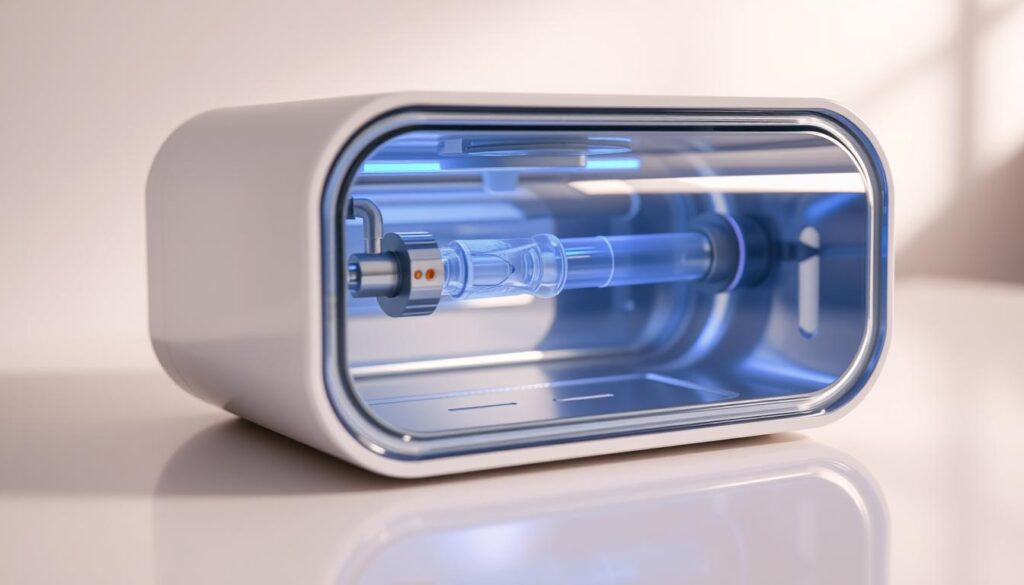
UV water purifiers kill bacteria and viruses. They don’t remove dissolved solids. This is great for homes wanting clean drinking water.
Understanding Ultraviolet Water Disinfection
UV water disinfection uses UV light to kill germs. UV light damages the DNA of bacteria, viruses, and other pathogens. This makes them unable to grow and safe for us.
Effectiveness Against Bacteria, Viruses, and Other Microorganisms
UV purifiers work well against many germs. They can kill up to 99.99% of germs if kept in good shape. But, they don’t get rid of dissolved solids or heavy metals.
Pros and Cons of UV Purification Technology
UV purification has many good points. It’s very good at killing germs, easy to set up, and cheap to keep running. Some main benefits are:
- High effectiveness against a wide range of microorganisms
- Easy to install and maintain
- Low operating costs
But, there are downsides too. It can’t remove dissolved solids or heavy metals. And, you need to change the UV lamp often. Important things to think about are:
- Not effective against dissolved solids or heavy metals
- Requires periodic UV lamp replacement
RO Water Purifier vs UV Purifier: A Comparative Look
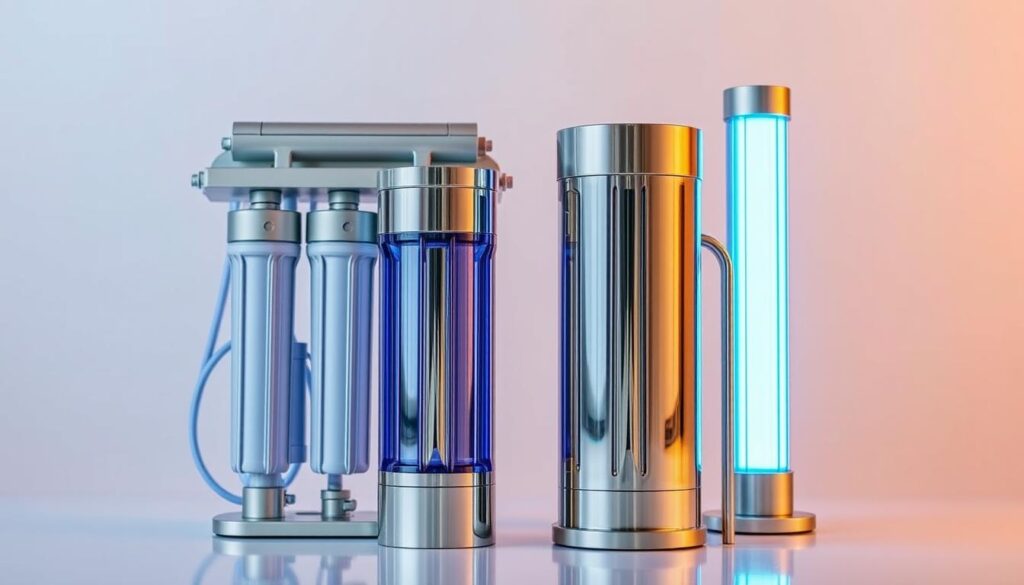
It’s important to compare RO and UV water purifiers. This helps you choose the best one for you.
Purification Effectiveness and Water Quality Results
RO water purifiers remove many contaminants like dissolved solids and bacteria. UV purifiers kill bacteria and viruses but don’t remove dissolved solids.
RO Purifiers make water very pure, removing up to 99% of contaminants. But, they might take out good minerals too. UV Purifiers disinfect water well but need pre-treatment for other impurities.
| Purifier Type | Contaminants Removed | Effectiveness |
|---|---|---|
| RO Purifier | Dissolved solids, bacteria, viruses, heavy metals | Up to 99% |
| UV Purifier | Bacteria, viruses, microorganisms | High, but requires pre-treatment |
Installation Requirements and Maintenance Costs
RO purifiers need complex installation with many stages. UV purifiers are simpler, needing just a UV lamp in the water line.
RO systems cost more for maintenance, needing filter and membrane replacements. UV systems are cheaper, needing only a UV lamp replacement each year.
Energy Consumption and Environmental Impact
RO purifiers use more energy because of the high pressure needed. UV purifiers use less energy, just for the UV lamp.
RO systems waste water during use. UV systems waste less water, making them better for the environment.
Initial Investment and Long-term Operating Costs
RO purifiers cost more upfront due to complex installation. UV purifiers are cheaper because they’re simpler.
RO systems cost more over time for filter replacements. UV systems are cheaper, mainly for UV lamp replacements.
In conclusion, choosing between RO and UV purifiers depends on your needs. Consider contaminants, installation, and costs.
Key Factors to Consider When Choosing Between RO and UV Systems
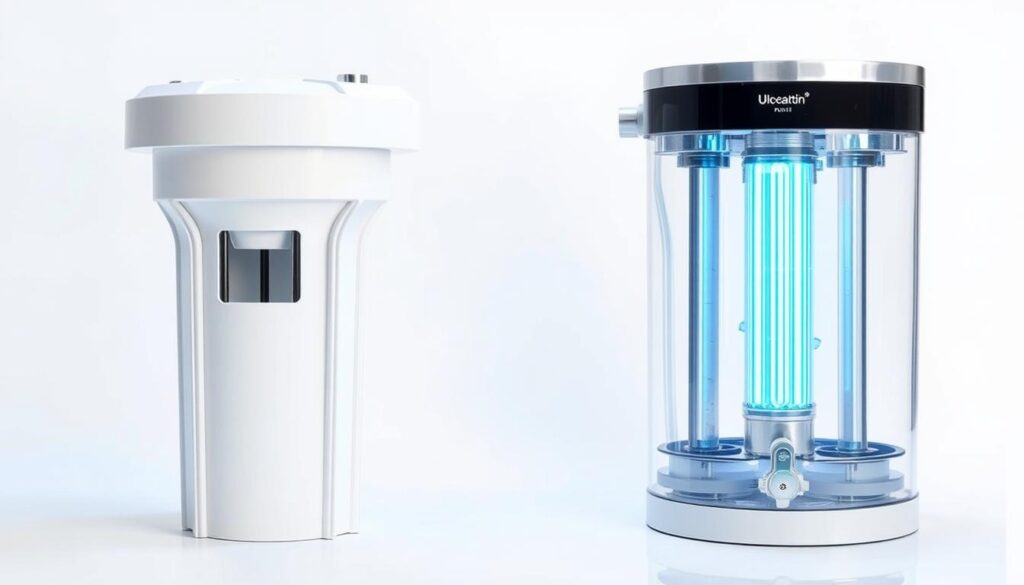
Choosing between RO and UV water purifiers is important. You need to think about what’s best for your home. Knowing what you need helps you pick the right system.
Assessing Your Local Water Quality and Contamination Issues
First, check your local water quality. If your water has lots of solids or metals, an RO system might be more suitable. But, if you worry about germs, a UV purifier could be enough. Testing your water is key to know what’s in it.
Space Requirements and Installation Considerations
Think about where you’ll put the system. RO systems need more space for extra parts. UV purifiers are smaller. Make sure the system fits well and is easy to get to for upkeep.
Household Water Consumption and Purification Needs
How much water your family uses matters too. If you use a lot, you need a system that can keep up. RO systems are good for big families because they can handle more water. Think about your water use when picking a system.
Combined RO+UV Systems: When You Might Need Both Technologies
Sometimes, you might need both RO and UV systems. This is true if your water has many kinds of bad stuff. A combined RO+UV system protects well. It makes sure your water is clean and tastes good.
By looking at these important points, you can choose wisely. This way, your home will have safe, clean water to drink.
Making the Best Water Purification Choice for Your Family
Choosing the right water purifier is very important. It makes sure your family drinks safe water. Both RO and UV technologies have good points and bad points.
Think about what you need when picking between RO and UV. Look at water quality, how much space you have, and how much it costs to keep it up. A RO vs UV water filter comparison shows RO systems remove many kinds of bad stuff. UV systems kill bacteria and viruses well.
A water purification comparison helps you decide. If your water has lots of dissolved solids, RO might be best. But if it has bacteria and viruses, UV is better. Sometimes, using both RO and UV together works best.
Know your local water quality and what your family needs. This helps you pick the right water purifier. By looking at the good and bad of each, you can choose the best for your family.
Leave a Reply