
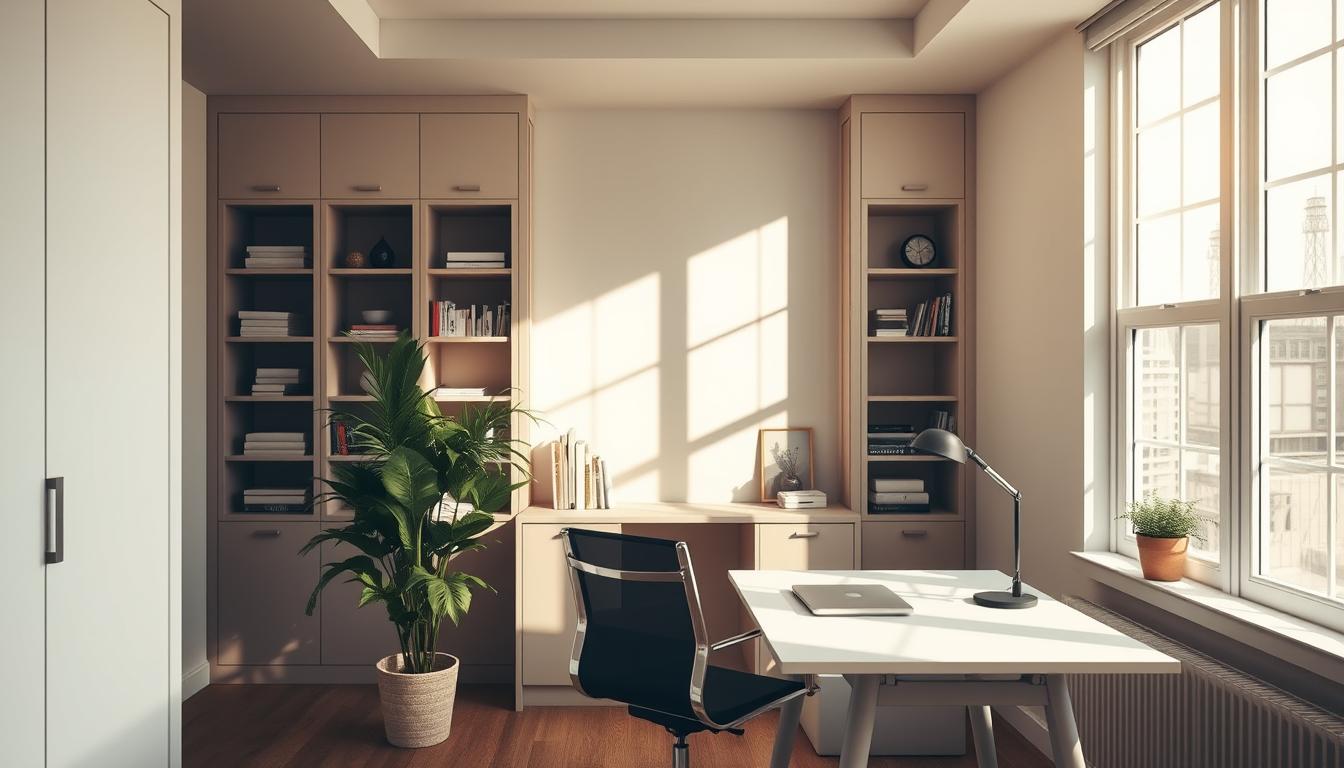
Make your home office work for you by using thoughtful design ideas that expand a room visually and functionally without remodeling. A clear layout and the right desk placement improve focus and keep the workspace calm.
Interior experts suggest putting your desk away from the entrance and avoiding having your back to the door. That simple move reduces distractions and makes the room feel purposeful.
Choose a sit-stand model from Fully or a compact table so you can shift positions during the day. Use vertical solutions like an IKEA pegboard and under-desk hooks to lift supplies and keep the floor clear.
Warm color accents, an accent lamp, and art hung slightly above eye level add depth and the illusion of taller walls. Tie up cables with zip ties and add a rug to stretch sight lines and make even tight layouts feel larger.
Key Takeaways
- Place your desk away from the door to boost focus and calm.
- Pick adaptable furniture like sit-stand desks to support daily flow.
- Use vertical storage and under-desk hooks to free floor area.
- Warm lamps, color accents, and higher art add height and personality.
- Tidy cables and a clear floor under the desk make the room feel larger.
Start Smart: Present-day space audit, measurements, and goal-setting for a tiny workspace
Start by taking exact measurements and mapping movement in the room before you buy anything. Note floor length and width to the nearest inch, plus wall heights. Mark every window, outlet, and door swing on paper.

Measure twice: floor, wall height, window and outlet locations
Measure each wall and list the distance between outlets. Track glare patterns from windows across the day. This prevents surprises when you place a desk or lamp.
Define work modes: focus, calls with clients, storage needs
Decide where calls, deep work, and supply storage will happen. Pick a location so frequently used items stay within arm’s reach. Map traffic flow and avoid blocking doors.
- Plan lighting: note gaps and add task lamps where needed.
- Think vertical: mark walls for shelves, pegboards, and clips; locate studs for safe mounting.
- Create a minimalist checklist that aligns items with available square footage.
Commit to a daily reset to keep the home office tidy and boost productivity every morning.
Layouts that work: desk orientation, flow, and using the floor wisely
How you angle the desk changes traffic flow and can make a room feel more open instantly.

Face power: place the desk away from the door and avoid backs to entrances
Start with sightlines. Place the desk so you can see the entry without sitting with your back to it. This reduces distractions and helps you feel in command of the room.
Single desk vs. dual desks: don’t “cut the room in half”
One well-sized desk usually keeps the space feeling larger than two that split the floor. Two desks can create a visual barrier and shorten walking paths.
Sit-stand desks and slim tables for flexible work
Choose a sit-stand model from Fully or a slim table to keep the layout agile. These desks support different postures and let the room breathe without adding bulk.
Clear underfoot: keep floor space open beneath the desk
Keep storage off the ground and tie up cables to keep the floor continuous. Pull the desk a few inches from the wall to route cords and add a shallow shelves rail without crowding the path.
Test your plan with painter’s tape on the floor to check chair roll-back and corner turns. Small angling tweaks or a corner return can give extra surface without blocking flow.
Maximizing small office spaces with vertical storage and wall solutions
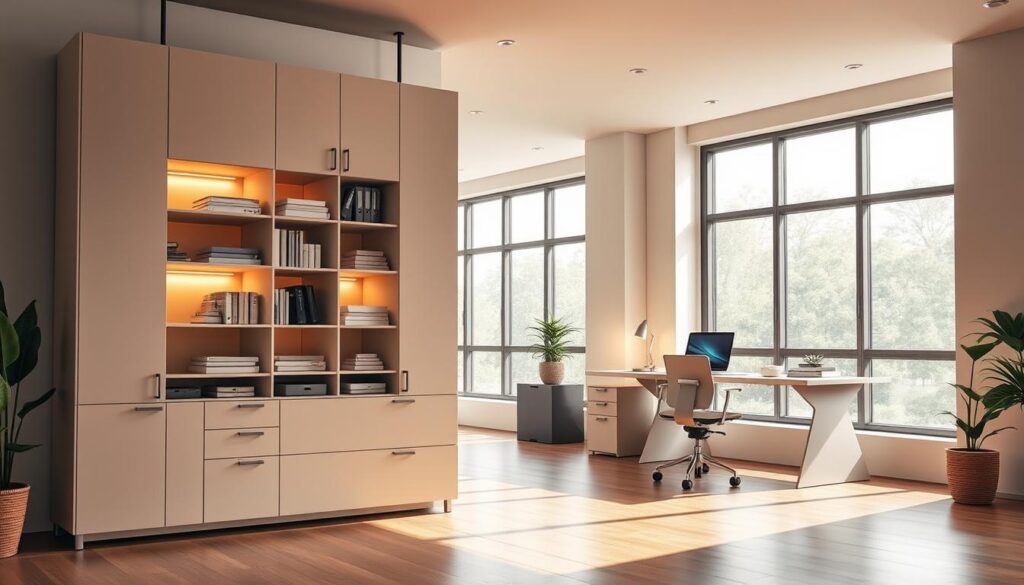
Think vertical first: move daily items from your desk to the wall to free up the work surface.
Pegboards and rails
An IKEA pegboard clips to a desk back without damaging the wall. Add hooks, trays, and magnetic clips to lift supplies and clear surface clutter.
Floating shelves and over-desk hutches
Floating shelves stack books and bins at varied heights so light and sight lines stay open. An over-desk hutch gives extra storage without taking floor area.
Files, bins, and art
Wall-mounted file holders keep papers visible and off the desktop. Use bins and slim cabinets to hide smaller items.
Hang art just above eye level and add a warm color or lamp to draw the eye up and give the room more height.
- Accessories kit: hooks, trays, clips, and magnetic attachments for tidy organization.
- Route seldom-used items upward so the core work zone stays calm and efficient.
- Keep desk edges and the underside clear so vertical solutions replace surface piles, not supplement them.
| Solution | Benefit | Ideal placement | Quick tip |
|---|---|---|---|
| Pegboard / rails | Clear desk, easy access | Behind or above desk | Use trays for pens and chargers |
| Floating shelves | Stack books without blocking light | Staggered heights on side walls | Mix open and closed storage |
| Wall files & bins | Reduce paper clutter | Within arm’s reach | Label visible folders |
| Over-desk hutch | Extra capacity with no footprint | Directly above desk | Keep daily items below, archive above |
Multifunctional furniture that makes space do double duty
Choose furniture that works harder than it looks to keep your work area tidy and flexible. Smart pieces let a room serve as a guest nook, craft spot, or study without extra clutter.

Wall-mounted and drop-leaf desks that fold away
Wall-mounted folding desks and drop-leaf tables free floor area when not in use. They are ideal for a home that needs to shift roles during the day.
Ladder and secretary desks with hidden storage
Ladder desks combine a lean work surface with integrated shelves for vertical storage. Secretary desks hide the workstation behind a closed front so clutter is invisible after hours.
Rolling cabinets and carts that shift from storage to seating or printer stands
Rolling cabinets and carts offer flexible solutions. Use one as a mobile filing unit, a printer stand, or a quick extra seat for guests.
- Pair a compact table surface with hidden drawers to avoid separate pedestals.
- Curate only daily items on or near the desk and move seasonal gear into concealed storage.
- Choose pieces that serve as seating, filing, and display so fewer objects do more work.
| Piece | Primary benefit | Best for |
|---|---|---|
| Wall-mounted folding desk | Reclaims floor area when closed | Multipurpose rooms, hallways |
| Ladder desk | Vertical storage + work surface | Rooms with high walls |
| Secretary desk | Hidden workstation and drawers | Shared living areas |
| Rolling cabinet/cart | Mobile storage and extra seating | Printer stations, flexible layouts |
Smart cable and tech management for a tidy, professional office
Smart cable routing keeps power and peripherals out of sight and in reach. A compact, planned layout makes the entire space feel cleaner and more professional.
Under-desk trays, cord clips, and sleeves to tame cables
Start with an under-desk tray to hold power strips and slack. This moves cords off the floor and into hidden storage so the room looks intentional.
Use cord clips and braided sleeves on runs along the back and down legs. These accessories stop tangles and cut visible clutter quickly.
USB hubs, wireless charging, and keyboard trays to free your desk
Put a powered USB hub and a wireless charging pad near your work area to reduce the number of cables on top of the desk. A slim keyboard tray frees the main surface when you’re not typing.
Labeling and power strip placement to streamline daily setup
“Label once today and save minutes every morning.”
Place power strips where adapters are easy to reach. Label each cord so your daily setup and teardown take seconds, not minutes.
- Tip: Route seldom-used cables into the tray so the visible space stays clear.
- Keep a short cable for charging and tuck extras into storage to avoid a messy desktop.
- Thoughtful cable care doubles as visual organization, giving your home office a professional feel and a calm workspace.
Light, color, and walls: design touches that boost productivity
Layered light and a careful splash of color lift mood and reduce eye strain. Use a mix of task and accent fixtures to keep the work zone bright without cluttering the desk.
Accent and task options: clamp lamps, pendants, and warm tones
Clamp lamps and pendant lights save surface area and focus illumination where you need it most.
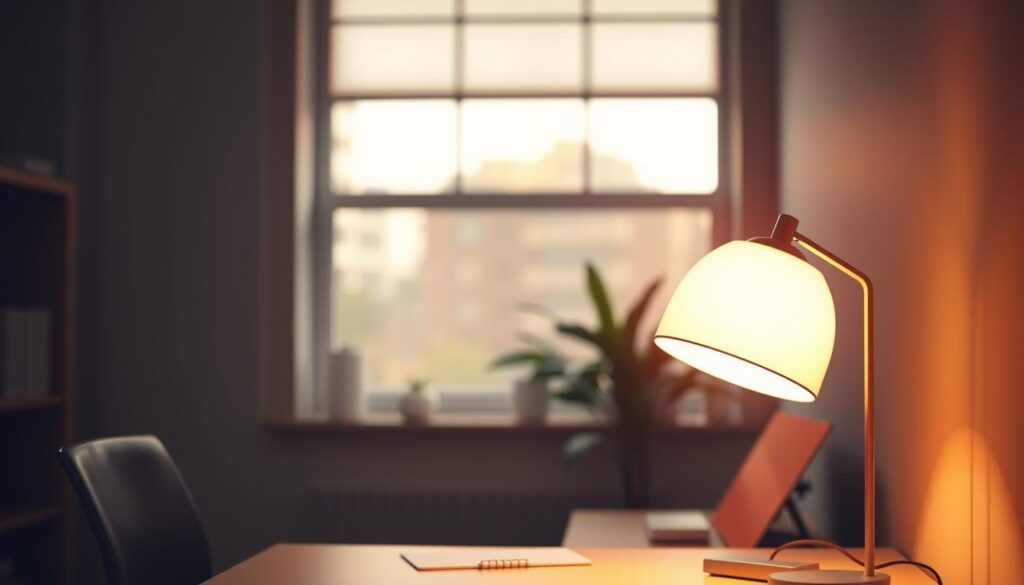
Warm-toned accent lamps add a welcoming glow that personalizes a home or office and makes long sessions feel less clinical.
Daylight bulbs and window placement to reduce glare
Choose daylight bulbs to support energy and a steady circadian rhythm. They lift alertness during work hours.
Position desks perpendicular to a window to keep natural light in view while cutting screen glare. This simple layout protects concentration and comfort.
Color pops and wall art to add depth without crowding
Add one framed print or a single colorful accessory to create depth. Hanging art slightly above eye level draws the eye up and boosts perceived height of the walls.
Balanced lighting and a focused color accent improve productivity by reducing strain and keeping the workspace calm.
| Option | Best use | Effect on desk | Quick tip |
|---|---|---|---|
| Clamp lamp | Task lighting for keyboard and papers | Leaves surface clear | Attach to shelf or desk edge |
| Pendant light | Ambient and accent over work zone | Doesn’t use desktop area | Choose warm bulb for coziness |
| Daylight bulb | Full-room energy and focus | Affects color accuracy | Use with dimmer for comfort |
Seating and ergonomics for comfort in compact areas
The right chair and positioning keep your body happy and your focus steady all day.
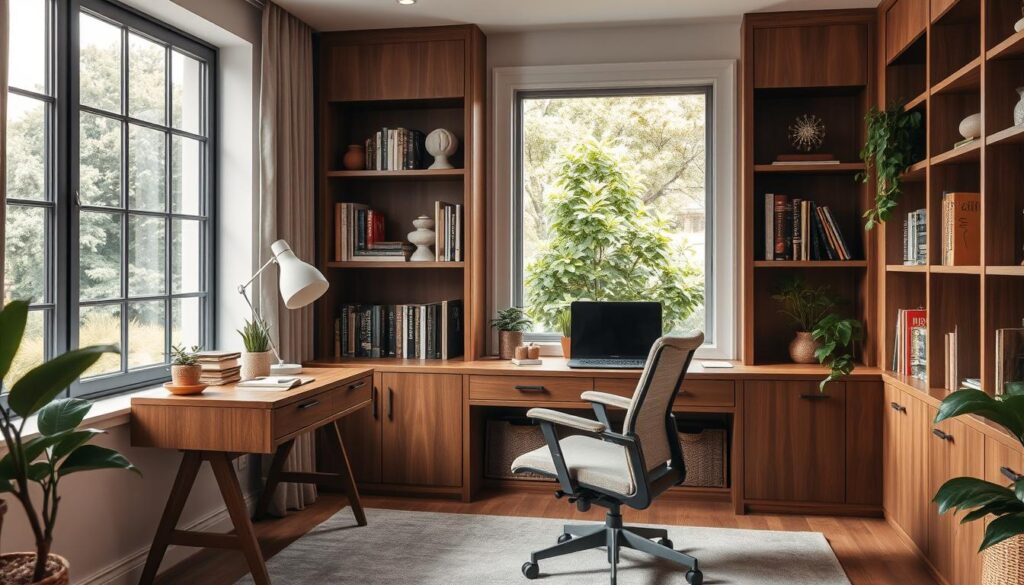
Pick compact ergonomic chairs under 24 inches wide or armless swivel chairs that tuck fully under the desk. These options save floor space while supporting posture.
Compact, alternative, and supportive seating
Consider saddle stools, kneeling chairs, or folding desk seats when a traditional chair feels oversized. Add a lumbar cushion or seat pad to boost comfort without swapping furniture.
Monitor height and foot support
Raise your screen so the top third sits at eye level. Keep the keyboard close and use a footrest to maintain a neutral leg angle.
“Test setup before you buy: roll the chair, check clearance, and sit for 20 minutes.”
- Choose chairs that tuck under the desk to clear the floor.
- Add low-cost cushions and lumbar supports for targeted relief.
- Test chair roll distance and clearance so the area feels smooth from day one.
These small moves protect posture and make your home office or office workspace more comfortable for long work sessions.
Creative nooks: corners, closets, and under-stair areas turned workspaces
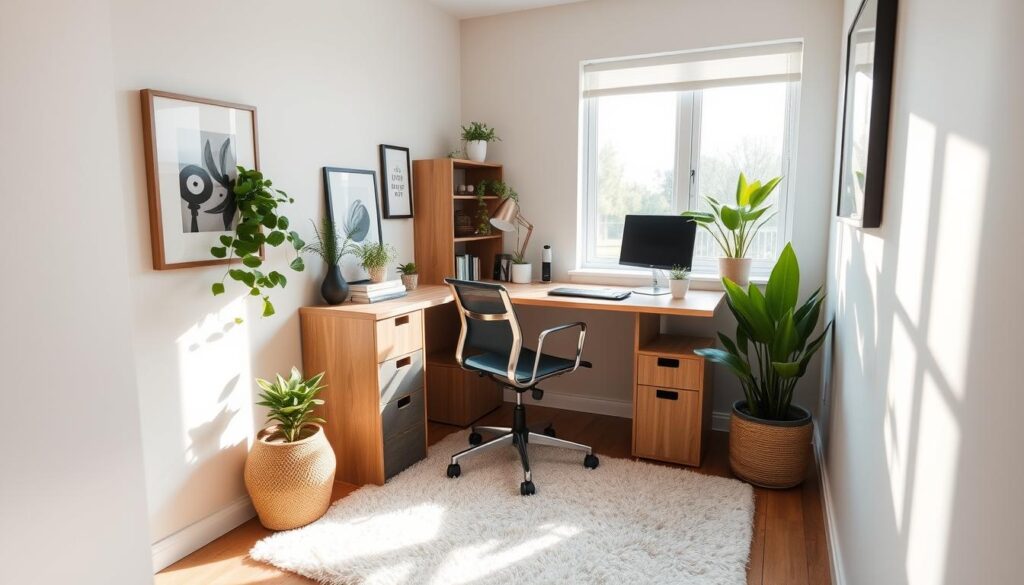
Unused corners and closets can become quiet, focused workstations with a little planning. These tucked areas keep work separate from daily life and help you make space without remodeling.
Cloffices: closet conversions that work
Turn a shallow closet into a cloffice by adding low shelves, task lighting, and a wall-mounted or drop-leaf desk. A folded desk frees the area when you close the doors.
Tip: Place a small power strip inside and label cords so tech only appears when you open the door.
Corner desks and triangle tables
Corner desks and triangle tables capture awkward geometry and put every inch to use. These pieces fit tight corners and create a focused work area without stealing the room.
Hallway, landing, and window corners
Hallway stretches, stair landings, and window corners host slim setups that don’t block passage. A narrow desk and a chair can become a dedicated spot for calls or quick tasks.
Keep the floor clear and add rolling storage
Raise cabinets an inch off the floor to ease cleaning and keep the area light. Use command hooks to hang bags and headphones.
Choose rolling storage that fits the nook so you can slide printers or files out only when needed, then tuck them away to reclaim the place.
| Solution | Best fit | Benefit | Quick tip |
|---|---|---|---|
| Closet cloffice | Shallow closet | Private, hidden work zone | Use a drop-leaf desk and LED strip light |
| Corner desk / triangle table | Room corners | Uses awkward angles efficiently | Measure corner depth before buying |
| Narrow hallway desk | Hallway or landing | Stealthy workspace that keeps flow | Keep depth under 18 inches |
| Raised cabinet + hooks | Nooks and under-stairs | Cleaner look and easy cleaning | Lift cabinets 1 inch and add command hooks |
Your next step: turn small spaces into a big productivity win
A focused plan and a few targeted swaps can turn any tight room into a productive home office.
Start with a quick audit: orient the desk away from the door, add floating shelves or a pegboard, and fit a clamp lamp with a daylight bulb to lift light and mood. Route cords into an under-desk tray so clutter stays out of sight.
Consider a fold-away desk or a rolling cart as a flexible solution that supports work and then disappears. Swap one piece of furniture at a time to match your interior and needs.
Try a 5-minute end-of-day reset: clear the surface, slide away a cart, and tuck cables. That small routine keeps your office space fresh and ready the next day.
These ideas create a real-world solution that boosts productivity and fits your design.
Leave a Reply