
Introduction
Choosing the right Internet Service Provider (ISP) can feel overwhelming, especially with so many options on the market. In the U.S., four major players dominate home internet: Spectrum, Xfinity, Verizon, and AT&T. While all promise fast speeds and reliable WiFi, they differ in technology, availability, pricing, and features.
In this guide, we’ll break down what each ISP offers, their strengths and weaknesses, and how to choose the best one for your needs.
Spectrum Internet
Type: Cable Internet
- Speeds: 300 Mbps to 1 Gbps
- Data Caps: None
- Equipment: Free modem, optional WiFi 6 router rental
- Availability: Widely available in urban and suburban areas across 40+ states
Pros:
- No data caps (great for streaming and gaming)
- Simple plan structure
- Reliable cable speeds
Cons:
- Upload speeds are slower compared to fiber (usually 10–35 Mbps)
- Pricing may increase after promotional period
👉 Best for families and households that use a lot of streaming services without worrying about data limits.
Xfinity Internet
Type: Cable Internet (some areas also have fiber)
- Speeds: 200 Mbps to 2 Gbps (depending on location)
- Data Caps: Yes, usually 1.2 TB per month in many regions
- Equipment: xFi Gateway router + access to nationwide Xfinity WiFi hotspots
- Availability: Largest coverage in the U.S., particularly in cities and suburbs
Pros:
- Extremely wide availability
- High-speed options, including Gigabit plans
- Hotspot access outside your home
Cons:
- Data caps in most markets
- Fees for equipment rental and overage charges
👉 Best for users who need broad coverage and access to public WiFi hotspots.
Verizon Internet (Fios + 5G Home)
Type: Fiber (Fios) & Fixed Wireless (5G Home)
- Speeds: 300 Mbps to 2 Gbps (Fios), 100 Mbps to 1 Gbps (5G Home)
- Data Caps: None
- Equipment: WiFi 6 router often included
- Availability: Fios mainly in the Northeast U.S., 5G Home expanding nationwide
Pros:
- Symmetrical upload and download speeds with fiber
- No contracts for many plans
- No data caps
Cons:
- Fios only available in limited regions
- 5G Home can vary depending on network coverage
👉 Best for professionals and content creators who need fast uploads and reliable fiber performance.
AT&T Internet
Type: Fiber, DSL (limited), Fixed Wireless
- Speeds: 300 Mbps to 5 Gbps (fiber)
- Data Caps: None on fiber; 1 TB on some DSL plans
- Equipment: AT&T Smart WiFi Gateway
- Availability: Strong presence in the South, Midwest, and select cities nationwide
Pros:
- Extremely fast fiber speeds (up to 5 Gbps)
- No annual contracts on most plans
- Bundling options with TV and phone services
Cons:
- Fiber still not available everywhere
- DSL is slower and outdated in many regions
👉 Best for high-speed users in AT&T Fiber coverage areas, especially gamers and remote workers.
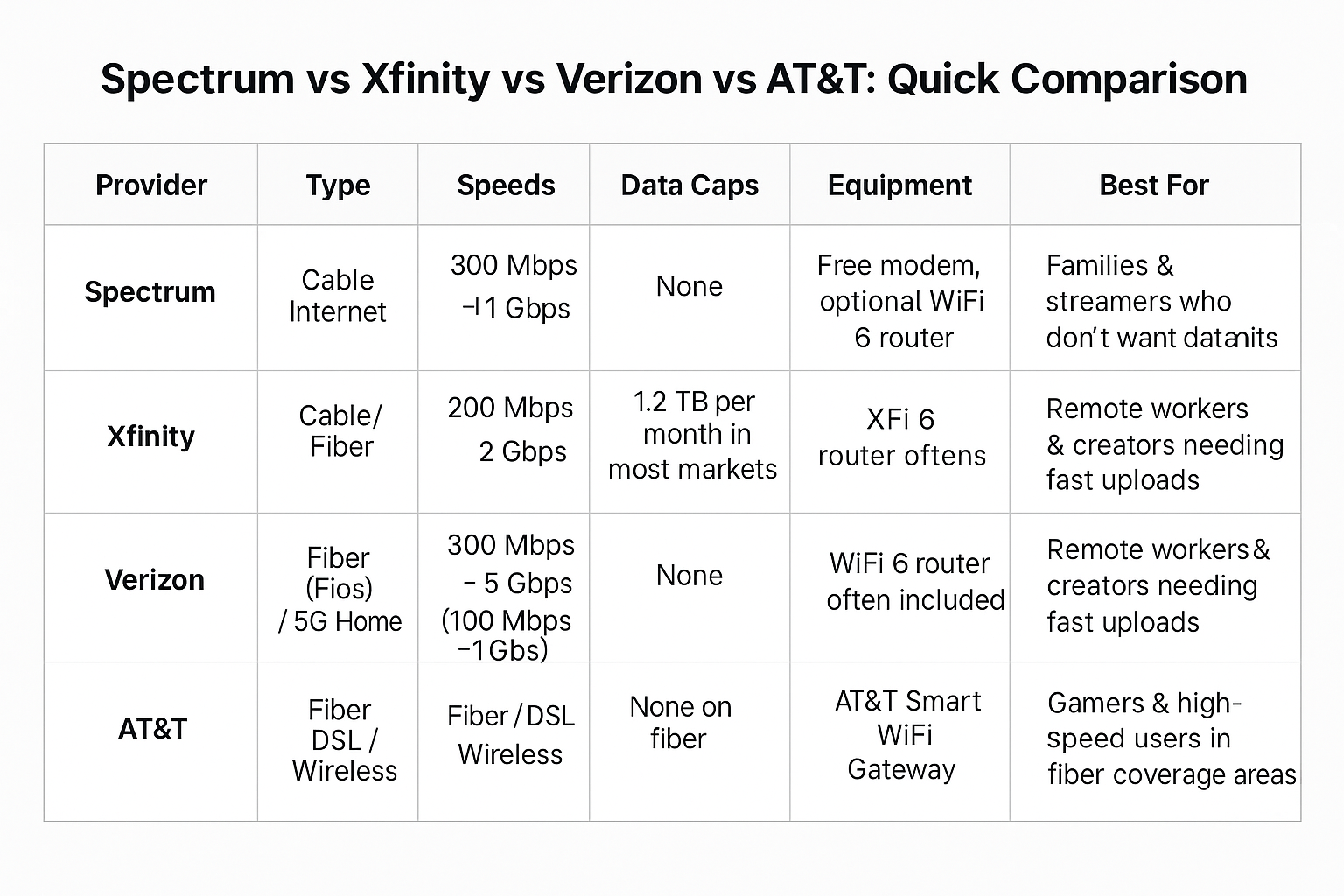
Spectrum vs Xfinity vs Verizon vs AT&T: Quick Comparison
| Provider | Type | Speeds | Data Caps | Equipment | Best For |
|---|---|---|---|---|---|
| Spectrum | Cable Internet | 300 Mbps – 1 Gbps | None | Free modem, optional WiFi 6 router | Families & streamers who don’t want data limits |
| Xfinity | Cable / Fiber (some areas) | 200 Mbps – 2 Gbps | 1.2 TB per month in most markets | xFi Gateway router + WiFi hotspot access | Households needing wide coverage & hotspot access |
| Verizon | Fiber (Fios) / 5G Home | 300 Mbps – 2 Gbps (Fios), 100 Mbps – 1 Gbps (5G) | None | WiFi 6 router often included | Remote workers & creators needing fast uploads |
| AT&T | Fiber / DSL / Wireless | 300 Mbps – 5 Gbps (fiber) | None on fiber; 1 TB on DSL | AT&T Smart WiFi Gateway | Gamers & high-speed users in fiber coverage areas |
Final Thoughts
When comparing Spectrum, Xfinity, Verizon, and AT&T, the best choice depends on where you live and how you use the internet:
- Choose Spectrum if you want no data caps and simple cable plans.
- Choose Xfinity for widest coverage and hotspot access.
- Choose Verizon Fios for true fiber speeds and symmetrical uploads.
- Choose AT&T Fiber if you need blazing-fast gigabit or multi-gigabit internet.
No single ISP is best for everyone. Availability is key—so check which providers service your area before deciding.
Leave a Reply